Quick summary (click to reveal)
Summary: Red balls became cricket's standard for durability and historical tradition. White balls were introduced for day-night limited-overs games but deteriorate quickly and clash with players' whites. Pink balls emerged as a compromise for day-night Tests, offering better swing and durability—but peer-reviewed research suggests they are actually less visible than red balls during day and dusk play, contradicting the visibility argument behind their adoption.
Full article below.
Red leather, white leather, pink leather. For most of cricket’s history, only one colour mattered. Red balls have dominated Test cricket since the 18th century, when English ball manufacturers preferred red dyes and the colour stuck—a quirk of industrial history that became tradition. But in the past two decades, cricket has gone through a chromatic revolution, and the reasons tell a story about visibility, money, durability, and an inconvenient gap between commercial promise and scientific reality.
Each ball colour exists because a format demanded something the last one couldn’t deliver. But the pink ball’s rise reveals a peculiar tension: the ball was sold as a solution to a visibility problem, yet academic research now suggests it created one instead.
Why red: history and physics
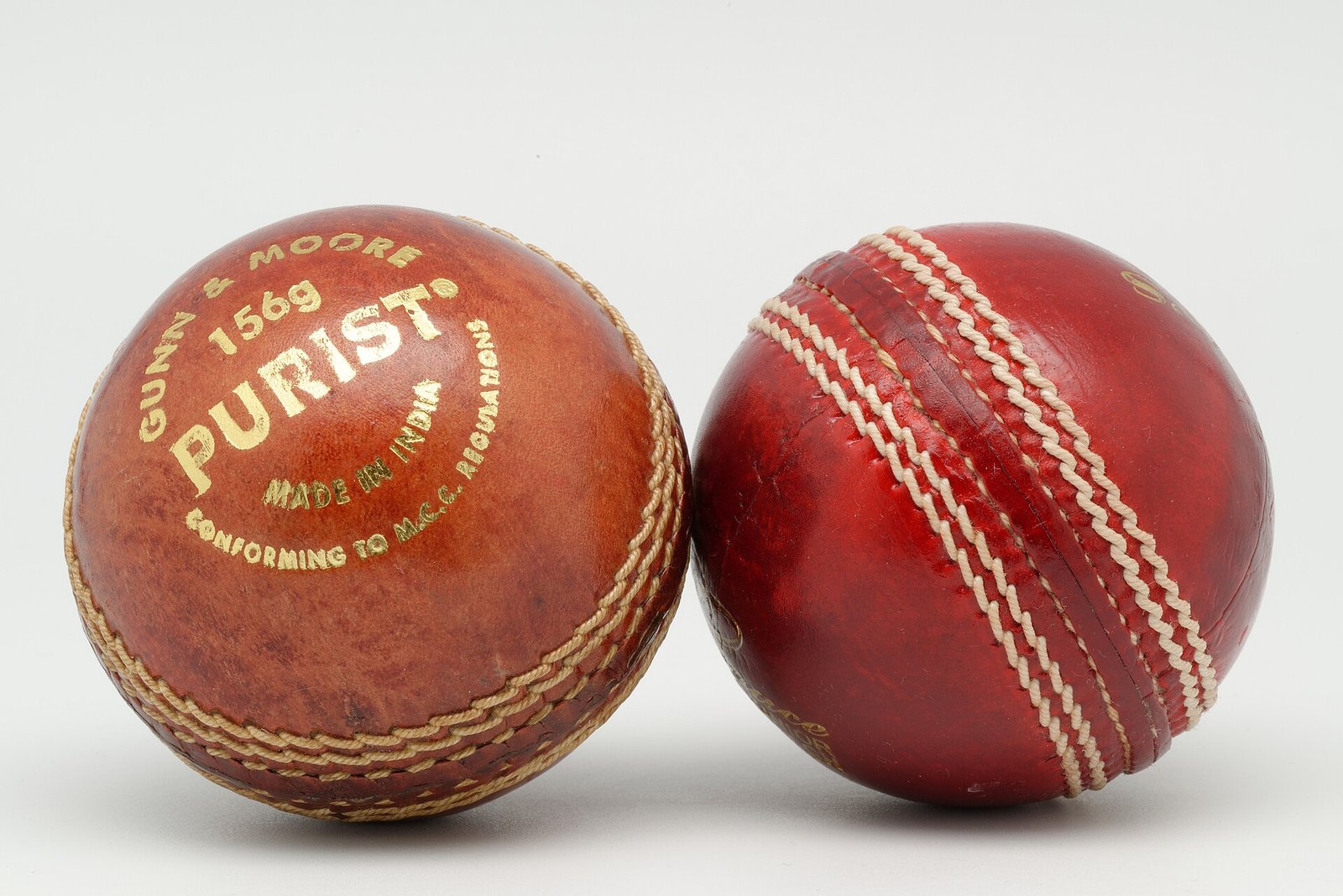
Red balls last longer. The traditional leather is treated with multiple coats of lacquer and polish, allowing a red ball to survive up to 80 overs of Test cricket—long enough to justify its cost and integral to the five-day rhythm. The seam is stitched entirely with synthetic material and white thread, a simple, proven design.
But red has a fatal flaw for evening play: it becomes nearly invisible under floodlights. This limitation didn’t matter for two centuries. Then limited-overs cricket arrived, and broadcasters wanted to schedule matches when audiences were awake.
The white-ball compromise—and its failures
White balls solved the floodlight problem. They were clearly visible at night, ideal for day-night one-day games and 20-over formats that needed to pack crowds into stadiums after work.
Yet white balls brought their own headaches. The bleaching process softens the leather, causing white balls to deteriorate in just 50–60 overs. More problematic, they become dirty and scuffed within a few overs, making it genuinely difficult for umpires to inspect whether a ball was in playable condition or beginning to degrade. There was also a deeper visual problem: Test cricket players wear white uniforms. A white ball against white flannels, on grass, under certain lighting, can be surprisingly hard to track.
The solution seemed obvious. Split the difference. Make it pink.
Pink balls: better swing, disputed visibility
The pink ball emerged from years of experimentation with orange and yellow alternatives. It first appeared in international cricket during a women’s match between England and Australia in 2008 as part of a Pink Sunday breast cancer awareness campaign. The first men’s international pink-ball Test followed in Adelaide in November 2015—a day-night match that Australia won by three wickets on day three.
Technically, pink balls are engineered differently. The seam combines synthetic and linen material, stitched with black thread. The linen absorbs dew, improving grip in damp evening conditions. The thicker, shinier coating keeps the ball glossier for longer, giving fast bowlers extra swing and seam movement—a genuine competitive advantage during twilight sessions when the pitch is wettest.
That last point matters strategically. Pace bowlers thrive in pink-ball Tests. With groundskeepers leaving extra grass on the surface to protect the softer ball, and dew settling as light fades, bowlers enjoy conditions that can drastically shift match momentum. Batting in the twilight session often becomes a trial.
The visibility paradox
Here is where the story gets complicated. The ICC and broadcasters promoted pink balls as a solution to visibility—a ball visible enough to play under lights, yet different enough from players’ clothes to track easily. The commercial logic was sound. Sell the format. Sell the ball. Fill the stadiums.
But in February 2024, peer-reviewed academic research challenged that narrative. A study examining professional players and elite umpires found that the pink ball was significantly less visible than the red ball during day, dusk, and night play—with visibility worst at dusk under floodlights, the exact conditions pink balls were supposed to solve. The pink ball lacks contrast against the pitch during daylight and blends poorly into various backgrounds during evening and night play.
This is not a minor quibble. It contradicts the fundamental rationale for the ball’s adoption. Pink-ball Tests remain a small subset of the fixture calendar, and the visibility issue has not prompted a reversal. But it reveals a gap between marketing reality and what players and umpires actually experience on the field.
Resistance and recent expansion
India resisted day-night Tests for years, citing concerns about dew and ball visibility. The Board of Control for Cricket in India did not host a pink-ball Test until 2019 (Eden Gardens, against Bangladesh), and reluctance to play them away lasted even longer. Australia, by contrast, embraced the format enthusiastically; Adelaide now exclusively hosts day-night Tests.
Since 2015, ten pink-ball Tests have been played. But the format remained confined to day-night matches—a niche innovation rather than a wholesale replacement.
That changed in June 2024 when the ICC approved trial use of pink balls in regular daytime Tests when bad light threatens to curtail playing time. The rationale is different now: not visibility, but time management. If fading light would otherwise interrupt play, a pink ball can extend the session. This regulatory shift hints at a future where pink might gradually become the default, even for traditional afternoon Tests.
What actually changes
The colour differences are not cosmetic. A red ball swings and seams differently than a white ball, which behaves differently than a pink ball. Bowlers must adapt. Batters face unfamiliar challenges. Dew, grass length, lighting, and seam composition all interact. Each colour represents a different covenant between the game and its audience: durability, visibility, drama, commerce.
Red remains the standard for traditional Tests. But its reign is no longer unchallenged—and the science suggests the challenge may not have been won on the merits of sight.
Sources
- Red, White & Pink Cricket Balls: What is the Difference? – Western Sports Centre
- Why are red, white, and pink balls used in international cricket? Why are they introduced in cricket? What are the major differences observed in the three balls? – Quora
- White Cricket Ball, Red & Pink Cricket Ball, What’s The Difference?
- Difference between Red, White and Pink Leather Cricket Balls – ZAP Cricket
- Red vs White vs Pink Cricket Balls (2025): Differences, Swing, Visibil – SVB Sports
- Red, White, and Pink: Understanding Cricket Ball Variations | Heega Sports
- Type of Cricket Balls: Red, White & Pink Explained
- not red not white