Category: Other Nations

  • The One-Run Escape: West Indies’ Final Victory Over Australia in 1993

    The One-Run Escape: West Indies’ Final Victory Over Australia in 1993

    Quick summary (click to reveal)

    Summary: West Indies won the fourth Test of the 1993 series at Adelaide by one run, with Australia needing just two more runs when McDermott was dismissed in the final over. It remains Test cricket's narrowest victory margin and marked a turning point in the West Indies' dominance.

    Full article below.

    On 26 January 1993, the fourth Test at Adelaide Oval became the site of Test cricket’s narrowest victory: West Indies defeated Australia by a single run. With Australia needing just two runs and Craig McDermott at the crease, the match ended in devastating fashion for Allan Border’s side, marking a crucial moment in an increasingly competitive series between the two nations.

    Australia arrived at Adelaide with the series still contested. The West Indies team that summer was depleted—missing Malcolm Marshall and Gordon Greenidge—and skippered by Richie Richardson. Under Border’s leadership and bolstered by a developing pace attack featuring Shane Warne, Australia believed they could break through. Warne’s performances earlier in the tour had given Australia genuine hope. The Frank Worrell Trophy remained the prize both teams sought.

    A Tightly Contested Match

    The Adelaide Test unfolded as a low-scoring contest. West Indies posted 213 and 184; Australia replied with 252. Curtly Ambrose’s bowling kept both teams’ scorecards modest—he would take 10 wickets for the match, finishing the series among the leading wicket-takers. When West Indies collapsed to 184 in their second innings, Australia were set a target of 186.

    The Australian reply began poorly. By mid-afternoon on day four, the home side had slumped to 102 for 8. The familiar pattern seemed to be reasserting itself. Yet what followed was unexpected resilience. Justin Langer provided determined batting. Tim May offered steady lower-order support. Together they clawed back toward the target with growing intensity.

    The Final Over

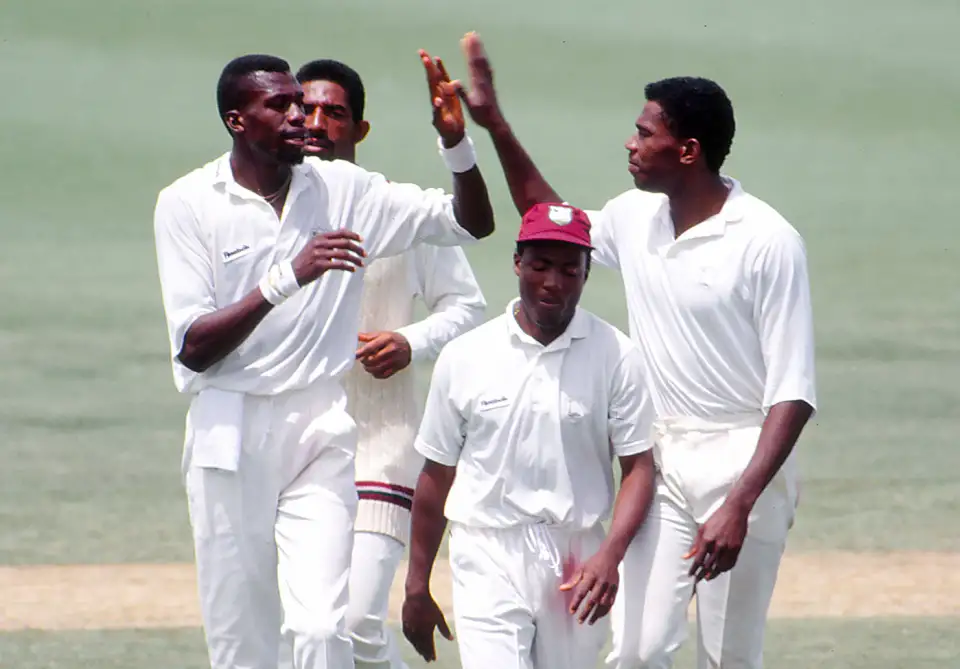
    As the afternoon wore on, Australia edged closer to an unlikely victory. With McDermott at the crease and just two runs required, the match entered its climactic phase. The West Indies bowlers held their nerve in the final overs. McDermott was dismissed in the decisive moment, and West Indies had held on by one run.

    The margin was unprecedented. No team had ever won a Test match by a single run before. For Australia, it was an agonising defeat—they had mounted a genuine challenge to West Indies’ traditional dominance, only to fall at the final moment.

    The Aftermath

    The Adelaide victory became one of the series’ defining moments, a narrow, hard-fought success that demonstrated the West Indies’ ability to prevail under extreme pressure. The one-run margin would remain one of sport’s most dramatic conclusions, a reminder that in Test cricket, the smallest margins sometimes carry the most weight.


    Sources

  • Soft Power Without Teeth: How the Artemis Accords and Cricket Governance Survive Without Enforcement

    Soft Power Without Teeth: How the Artemis Accords and Cricket Governance Survive Without Enforcement

    Quick summary (click to reveal)

    Summary: Both the Artemis Accords and cricket's ICC governance survive without formal enforcement by combining transparency, reputational cost, and formal representation for weaker parties. However, cricket governance faces greater fragility than space governance because it requires continuous consent from unequal members whose withdrawal would damage the system's legitimacy and commercial viability.

    Full article below.

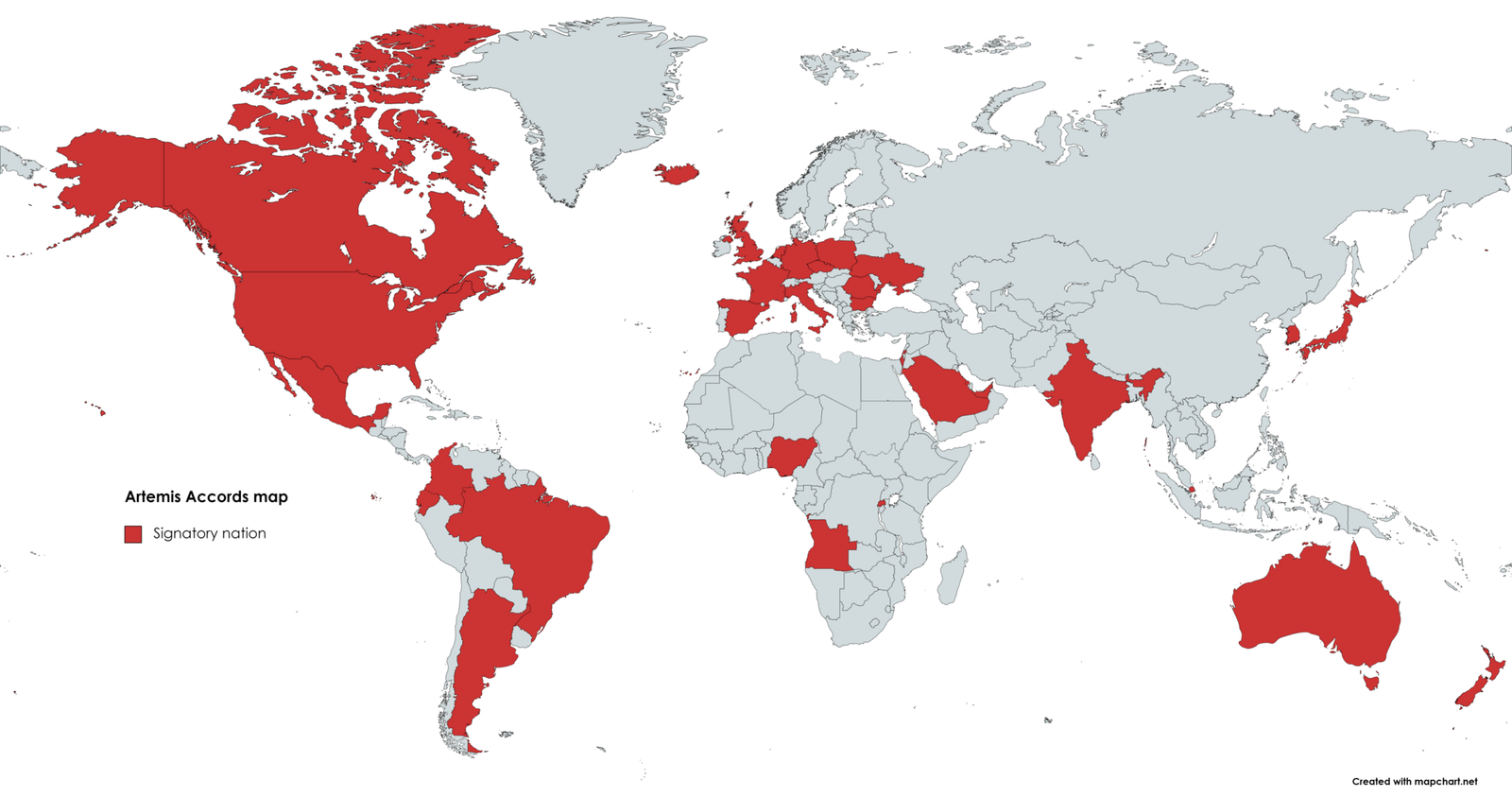
    The Artemis Accords, established in 2020 and linked to NASA’s American-led moon program, are not a treaty. They are a set of political principles: peaceful exploration, transparency, interoperability, mutual assistance, and resource-use compliance. Since their inception, nations have signed them voluntarily. Russia and China, both spacefaring superpowers, have not joined. Critically, there is no enforcement mechanism. There are no fines, no suspensions, no formal way to expel participants or compel compliance.

    Yet the framework persists. Nations continue joining. This voluntary commitment to a set of rules with no legal force raises a puzzle: why do sovereign nations choose to comply when no one can force them to?

    International cricket governance presents a structurally similar puzzle. The ICC, cricket’s global governing body, combines centralized rule-making with distributed authority. The Board of Directors comprises representatives from member nations, and the ICC establishes regulations for international competition formats, scheduling, and player conduct. However, member boards retain significant control over their own domestic operations and fixture selection. The ICC’s power is real but conditional, and constantly contested among its members.

    Asymmetry as the foundation

    Both frameworks are held together by participants who agree, for now, to follow rules that cannot be enforced against them.

    In space exploration, the asymmetry is technological. The United States and its allies possess the rockets, life-support systems, and navigation expertise. Smaller nations contribute funding and scientific capacity but depend on anchor powers’ hardware. In cricket, the asymmetry is commercial. Wealthy cricket nations—particularly India, England, and Australia—generate substantial revenue through domestic leagues and broadcast rights, giving them structural leverage. Smaller cricket nations have neither this financial power nor market influence, yet remain committed to ICC membership and competition structures that provide formal representation.

    What prevents either system from collapsing under this weight?

    Transparency appears to be essential. The Artemis Accords explicitly require signatories to disclose their space activities and share information about hazardous operations. The ICC publishes its regulations, board decisions, and governance structures. Neither institution operates as a black box. When rules are broken, observers can know. Reputational cost, loss of standing among peers, and exclusion from future cooperation become the primary enforcers.

    The second factor is that both preserve formal representation for non-dominant players. The Artemis framework allows participating nations to have a voice in conversations about humanity’s future in space, even if only the wealthiest can actually fund lunar exploration. The ICC’s membership similarly provides a pathway: smaller cricket nations can compete in international fixtures, access ICC development programs, and build infrastructure toward higher competitive status. The system is unequal, but it remains nominally open to participation.

    Where fragility emerges

    The model faces strain when smaller participants perceive that their formal voice does not translate into meaningful influence. The ICC has implemented governance changes in recent years affecting board composition and voting structures, though the specific outcomes and timelines of these reforms remain contested among member nations. These changes highlight a persistent tension: when dominant institutions adjust decision-making weight without transparent negotiation, the consent that holds the system together becomes strained.

    A critical structural difference emerges between the two cases: the Artemis Accords handle dissent through exclusion. Russia and China are not members; their objections do not undermine the framework. The ICC cannot function this way. It requires participation from major cricket nations and sufficient smaller-nation involvement to maintain broadcast rights, bilateral fixtures, and tournament revenue. Cricket governance is therefore more fragile than space governance: it must continuously negotiate consent among unequal partners whose withdrawal would damage the institution’s legitimacy and commercial viability.

    Why participation depends on choice

    The survival of major cricket formats depends partly on investment decisions by wealthy national boards, who balance cultural value, international prestige, and commercial returns. What the Artemis comparison reveals is how much cricket governance depends on fragile multilateral consent. Broadcasters invest because the ICC coordinates schedules. Players develop because national boards comply with ICC rankings and qualification pathways. Fans watch because the fixture calendar is predictable. All of this rests on member nations agreeing to follow rules that no one can enforce.

    The real story is not that protocols make cooperation inevitable. It is that both institutions survive by betting that sovereign actors will continue choosing participation. This bet works only if everyone believes they retain a genuine choice and that transparency ensures they can see when rules are broken. When either condition falters, so does the system.

    The enduring tension

    Neither the Artemis Accords nor cricket governance has solved the fundamental problem of maintaining order without enforcement. Both institutions demonstrate that voluntary frameworks can persist when built on visible asymmetries, transparent operations, and genuine—if unequal—participation rights. Yet both remain vulnerable to the moment when a major player calculates that the benefits of membership no longer justify the constraints of compliance. Until that moment arrives, soft power and reputation will continue to hold these systems together.


    Sources

  • Mendis Out, Asalanka In: How Sri Lanka’s Injury Crisis and Captaincy Split Test Squad Depth Before England

    Mendis Out, Asalanka In: How Sri Lanka’s Injury Crisis and Captaincy Split Test Squad Depth Before England

    Quick summary (click to reveal)

    Summary: Mendis' right hamstring injury rules him out of Sri Lanka's three T20Is against England starting 15 September, forcing Charith Asalanka into emergency T20I captaincy after just four days' notice. Mendis remains ODI captain if fit, creating a two-captain tour structure. Fast bowler Binura Fernando's back injury adds bowling pressure, though left-arm replacement Dilshan Madushanka provides some tactical variety.

    Full article below.

    Sri Lanka’s tour of England in September arrives as a corrective mission. They lost all three T20 Internationals against England in January and February 2026, then dropped the ODI series 2-1. Winning a bilateral against England in any format would mark their first series victory over the side in 12 years. Yet the squad that departed for Southampton on 5 September 2026 bore the scars of bad timing and bad luck, redrawn by injury and captaincy crisis within hours of the final selection.

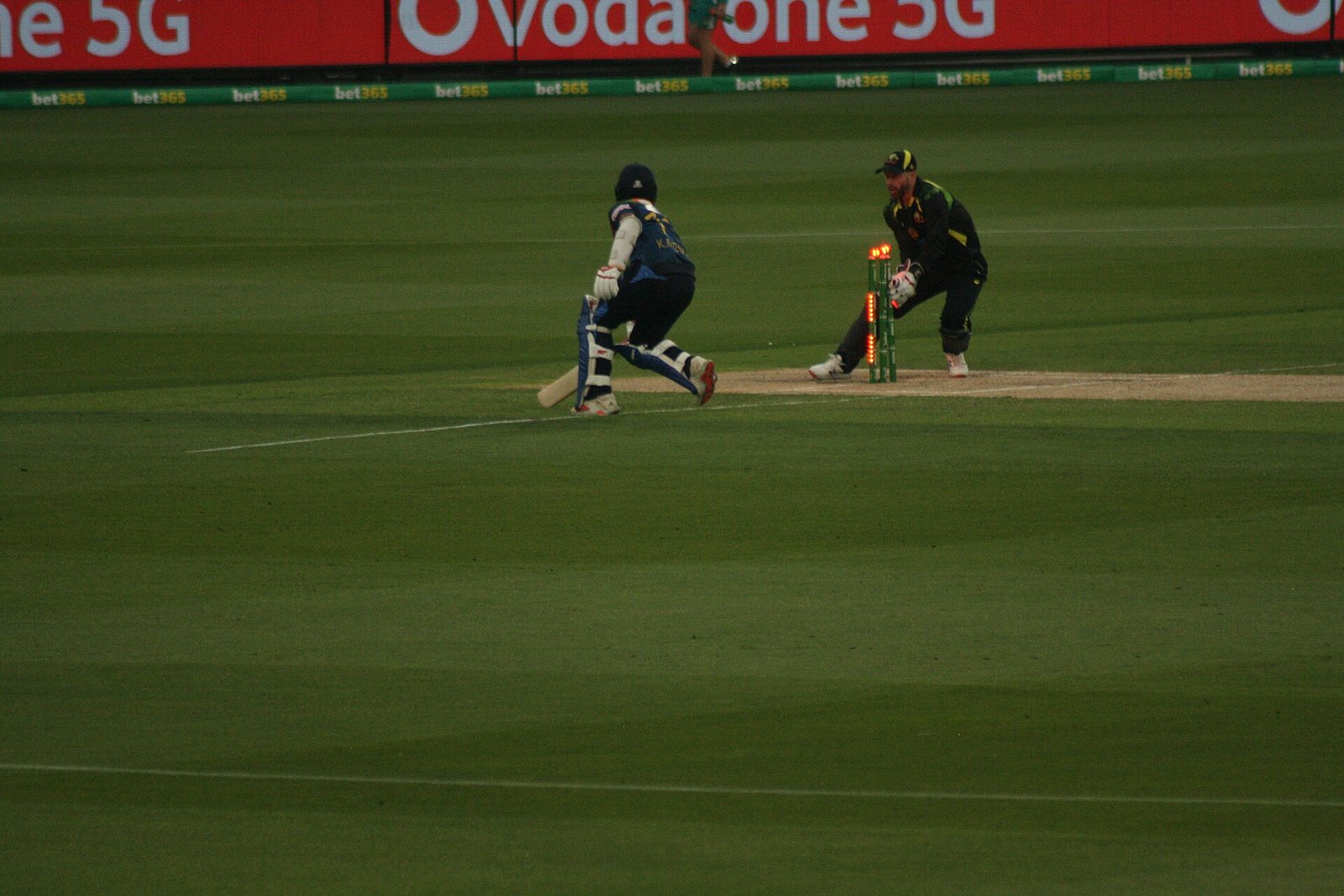
    On 19 July, Kusal Mendis pulled his right hamstring diving for a run in a Lanka Premier League match. That single moment, in a domestic T20 league game in Colombo, would unravel squad plans announced just days before departure. By 4 September, with the first T20I nine days away, Sri Lanka confirmed that Mendis would not play the T20I leg. Charith Asalanka, initially named vice-captain, was appointed captain of the T20 series in his place. Mendis remains named ODI captain, creating a fractured leadership structure across six matches in two weeks on English soil.

    The Wicketkeeping Void

    Mendis is not simply a batter. He is Sri Lanka’s primary wicketkeeper, and in 2026 he has been one of the side’s most dangerous ball-strikers. Across 14 T20I innings this year, he has scored 408 runs at a strike rate of 130.35. In ODIs, his four innings have yielded 211 runs at an average of 70.33. His removal creates a dual vacancy: behind the stumps and in the batting order.

    Pavan Rathnayake steps into the squad as his replacement. The selection is mathematically sound but tactically murkier. Rathnayake provides depth, yet lacks the match-winning tempo Mendis brings to either role. Against an England side that comprehensively outplayed Sri Lanka three months ago, the absence of a player who bats at better than run-a-ball velocity is not cosmetic.

    A Captaincy Shuffle at the Worst Hour

    Asalanka has captained Sri Lanka across formats in bilateral series against Bangladesh, West Indies and Australia during 2024 and 2025. Yet his return to T20I captaincy was not planned. He was brought in as second-in-command to Mendis, a role understood to be subordinate. Four days before the squad departed for England, he became captain of the T20 series. Neither man had time to discuss approach, nor Asalanka to prepare messaging for a squad that had just learned its leader would change mid-tour.

    Mendis remains named ODI captain. If his hamstring recovers in time, Sri Lanka will attempt to manage two leadership voices across two formats in a compressed tour window. The split captaincy structure—unplanned and hastily arranged—now stands as a test not only of squad depth but of institutional cohesion under pressure. Whether Asalanka can unite a T20 squad assembled in chaos, and whether Mendis can return fit for the ODI leg, will define whether this tour becomes a corrective mission or another lesson in how injuries and poor timing can derail even the most careful plans.


    Sources

  • Test Cricket’s First Tie: How the Impossible Happened at Brisbane in 1960

    Test Cricket’s First Tie: How the Impossible Happened at Brisbane in 1960

    Quick summary (click to reveal)

    Summary: On 14 December 1960, Australia and West Indies tied their Test at Brisbane—the first tie in 148 years of Test cricket. Australia needed 233 to win, collapsed to 92 for 6, then recovered through a 134-run partnership between Richie Benaud and Alan Davidson, only to lose Ian Meckiff to a run-out from Joe Solomon's direct hit with the scores level. Only one other tie has occurred in Test cricket since.

    Full article below.

    On the final afternoon of the first Test at Brisbane’s Gabba on 14 December 1960, Test cricket witnessed an outcome so rare that it would not happen again for another 26 years. Australia and West Indies ended their match with identical scores—each team having completed their innings—making the Tied Test the first, and still one of only two, such results in 148 years of the sport’s oldest format.

    It was not a draw. A draw requires the batting side to refuse a result; a tie demands equal runs and a completed fourth innings. The statistical improbability is matched only by the drama that preceded it: a West Indies team that looked destined for victory, an Australian collapse, a miraculous recovery, and a run-out that sealed the impossible on the final ball.

    The Setup: A Series Turned Upside Down

    The West Indies arrived in Australia for their first tour in December 1960 under Frank Worrell’s captaincy—itself a watershed moment in Caribbean cricket, as all previous West Indies captains had been white. They batted first and totalled 453, built on centuries from Garry Sobers (132) and contributions from Frank Worrell (65) and Joe Solomon (65). Australia replied with 505, anchored by Norm O’Neill’s 181 and Bob Simpson’s 92.

    The West Indies’ second innings yielded 284, setting Australia a target of 233. On paper, it was eminently achievable. In practice, it became a chase that defied probability.

    Collapse and Counter-Attack

    Wes Hall’s pace bowling decimated Australia’s middle order in the second innings. By the time Australia had reached 92 for 6, the West Indies seemed certain victors. The home team was crumbling, and there appeared no path to the required runs.

    Then came one of cricket’s great recoveries. Richie Benaud and Alan Davidson engineered a 134-run partnership that tilted the entire match towards Australia. The momentum swung so decisively that, with two balls remaining, the West Indies faced the genuine prospect of defeat.

    But Test cricket rarely offers safe resolutions, especially when so much drama remains.

    The Final Over: When All Outcomes Were Possible

    As the final over commenced, the scores were level. Both outcomes—an Australian victory or a West Indies win—remained mathematically possible within the space of a handful of deliveries. Such was the compression of possibility that, in the minutes before the end, a draw or even a tie had entered the conversation alongside the conventional results.

    Ian Meckiff was run out from Joe Solomon’s direct hit from square-leg on a ball that left the scores exactly level. The fourth innings was complete, and neither team had secured victory. Test cricket’s first tie had occurred.

    Legacy and Rarity

    Only one other tied Test has occurred since December 1960—a 26-year gap that emphasises the rarity of the outcome. Of the more than 2,570 Tests played since 1877, a tied result remains an extreme outlier, a reminder of how seldom cricket’s mathematics align so perfectly and how unusual it is for a result to hang on a single dismissal in the final moments of play.

    The West Indies lost the series 2–1, but the tour galvanised cricket in Australia. The team was paraded through Melbourne in open-top cars on 17 February 1961 to crowds that reflected their popularity and the excitement they had generated. Frank Worrell’s captaincy and the team’s attacking cricket—embodied by Sobers’ stroke-play and the pace of Wes Hall—captured Australian hearts and helped revitalise interest in international Test cricket at a time when the format needed oxygen.

    The Tied Test of Brisbane 1960 remains the most compelling argument for why Test cricket, at its finest, can compress an entire psychological journey—hope, despair, defiance, and heartbreak—into five days and a single, unforgettable run-out.


    Sources