Category: England

  • Why Jim Laker’s 19-wicket record is structurally impossible to break

    Why Jim Laker’s 19-wicket record is structurally impossible to break

    Quick summary (click to reveal)

    Summary: Jim Laker's 1956 record of 19 wickets in a Test match remains unbroken because modern cricket has engineered itself against such dominance. Format proliferation has reduced Test frequency, T20 has produced more aggressive batsmen, pitches are standardized for balance rather than prepared to favor spinners, bowling attacks are now diversified across multiple specialists, and fielding restrictions have been introduced. These structural changes make it effectively impossible for any single bowler to dominate a match the way Laker did, regardless of talent.

    Full article below.

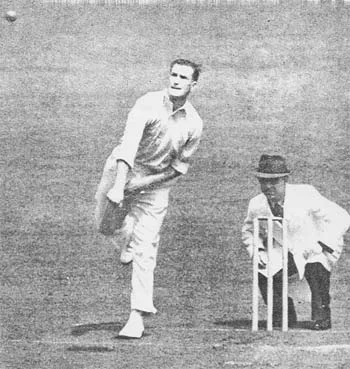
    On 31 July 1956, Jim Laker walked into cricket history at Old Trafford. The English off-spinner took 19 wickets for 90 runs across two innings against Australia, a record that stands unbroken nearly 70 years later. His first-innings figures of 9 for 37 remain the best ever recorded in a single Test innings. No bowler has taken more than 10 wickets in a match since.

    It is tempting to treat Laker’s achievement as simply the product of genius, a once-in-a-generation bowler meeting a perfect storm of conditions. But that story obscures something more unsettling. The reason no one has broken his record is not that no one has been skilled enough. It is that modern cricket’s structure, philosophy and rules have drifted so far from 1956 that the conditions which permitted his dominance can no longer exist.

    The paradox of an unbreakable record

    Laker’s 19 wickets remain an outlier even in his own career. Outside the 1956 Ashes series, where he claimed 46 wickets, he never took more than 20 wickets in any other series. The pitch at Old Trafford had been prepared to suit spin bowling. Australia’s batting was unprepared for the conditions. Laker and his partner Tony Lock operated in an era when bowling attacks were less balanced and batsmen saw caution as the path to survival, not a relic of a bygone age.

    Today, informed cricket observers suggest the record is effectively unreachable. Not because modern bowlers lack talent, but because the modern game has engineered itself against the very possibility.

    Format proliferation: fewer red-ball days

    The first structural barrier is time itself. The explosion of T20 leagues and the compression of bilateral cricket schedules mean players have fewer international Test matches per season. Specialist spinners historically positioned to take significant wicket hauls face increased competition for time allocation within their own calendar. A bowler cannot dominate a match that never arrives on the schedule.

    This is not a small effect. The busier T20 schedule, combined with international fixtures, has forced teams and players to prioritise franchise cricket over red-ball frequency. When Test series grow shorter and bilateral fixtures fewer, the statistical opportunity for a single bowler to claim 19 wickets in a single match shrinks proportionally.

    T20-shaped aggression in Test cricket

    Modern batting philosophy has fundamentally changed how players approach Test cricket. Players trained in T20 to read field settings, manipulate gaps and score with urgency now carry that tactical fluency into their long-format game. Captains and coaches no longer treat caution as the only path to victory. The result is a Test batsman who is harder to contain, more willing to attack spin and more mentally equipped to generate scoring opportunities against defensive fields.

    In 1956, batsmen prioritised wicket preservation above acceleration. Today, the balance has shifted, with batsmen far more willing to take risks early in their innings. That philosophical inversion makes it radically harder for any spinner to build the suffocating pressure Laker exerted.

    Pitches, rules and bowling restrictions

    The playing surface itself has changed. Pitches in 1956 were less standardised and more prone to deterioration that favoured bowlers, with irregular bounce and unpredictable turn. Modern cricket grounds are regulated toward greater consistency. Groundskeepers now prepare pitches designed to offer balance between bat and ball.

    Simultaneously, the Laws have shifted in batsmen’s favour. Fielding restrictions—such as limits on how many fielders can be placed outside the inner ring during certain overs—constrain a bowler’s ability to set purely defensive fields. The cumulative effect is that a modern bowler, however brilliant, faces structural constraints that their 1950s counterpart never did.

    The attack has diversified

    Laker operated in an era when bowling attacks were less balanced. He and Tony Lock formed a dominant spin partnership that could bowl the majority of a match’s overs. Modern teams field varied attacks: pace bowlers, spinners of different styles, and all-rounders who bat and bowl. A match is no longer won by a single bowler taking all the wickets. The 20 wickets available for a team to claim are now distributed across four or five specialists.

    The closest anyone has come to matching Laker’s dominance in a full match is Anil Kumble, who took 10 wickets in a single innings against Pakistan at Feroz Shah Kotla in 1999. While this remains the modern high point for a single innings performance, no bowler has matched Laker’s two-innings total in a match. This suggests that even in the era immediately before T20’s global ascendancy, the structural environment was already drifting away from Laker’s world.

    Why the record endures

    Laker’s 19 wickets is thus a record that endures not because it is impossible to reach, but because modern cricket has evolved too far to permit its repetition. The confluence of factors—a sympathetically prepared pitch, less aggressive batting, bowling dominance, and a calendar without competing formats—belonged to mid-20th-century cricket.

    In attempting to explain why this record stands, we discover something counterintuitive: the game has not moved beyond Laker through progress alone. It has moved sideways, into a structure where such dominance is no longer available, regardless of talent. The record is unbreakable not despite modern cricket’s sophistication, but because of it.


    Sources

  • Mendis Out, Asalanka In: How Sri Lanka’s Injury Crisis and Captaincy Split Test Squad Depth Before England

    Mendis Out, Asalanka In: How Sri Lanka’s Injury Crisis and Captaincy Split Test Squad Depth Before England

    Quick summary (click to reveal)

    Summary: Mendis' right hamstring injury rules him out of Sri Lanka's three T20Is against England starting 15 September, forcing Charith Asalanka into emergency T20I captaincy after just four days' notice. Mendis remains ODI captain if fit, creating a two-captain tour structure. Fast bowler Binura Fernando's back injury adds bowling pressure, though left-arm replacement Dilshan Madushanka provides some tactical variety.

    Full article below.

    Sri Lanka’s tour of England in September arrives as a corrective mission. They lost all three T20 Internationals against England in January and February 2026, then dropped the ODI series 2-1. Winning a bilateral against England in any format would mark their first series victory over the side in 12 years. Yet the squad that departed for Southampton on 5 September 2026 bore the scars of bad timing and bad luck, redrawn by injury and captaincy crisis within hours of the final selection.

    On 19 July, Kusal Mendis pulled his right hamstring diving for a run in a Lanka Premier League match. That single moment, in a domestic T20 league game in Colombo, would unravel squad plans announced just days before departure. By 4 September, with the first T20I nine days away, Sri Lanka confirmed that Mendis would not play the T20I leg. Charith Asalanka, initially named vice-captain, was appointed captain of the T20 series in his place. Mendis remains named ODI captain, creating a fractured leadership structure across six matches in two weeks on English soil.

    The Wicketkeeping Void

    Mendis is not simply a batter. He is Sri Lanka’s primary wicketkeeper, and in 2026 he has been one of the side’s most dangerous ball-strikers. Across 14 T20I innings this year, he has scored 408 runs at a strike rate of 130.35. In ODIs, his four innings have yielded 211 runs at an average of 70.33. His removal creates a dual vacancy: behind the stumps and in the batting order.

    Pavan Rathnayake steps into the squad as his replacement. The selection is mathematically sound but tactically murkier. Rathnayake provides depth, yet lacks the match-winning tempo Mendis brings to either role. Against an England side that comprehensively outplayed Sri Lanka three months ago, the absence of a player who bats at better than run-a-ball velocity is not cosmetic.

    A Captaincy Shuffle at the Worst Hour

    Asalanka has captained Sri Lanka across formats in bilateral series against Bangladesh, West Indies and Australia during 2024 and 2025. Yet his return to T20I captaincy was not planned. He was brought in as second-in-command to Mendis, a role understood to be subordinate. Four days before the squad departed for England, he became captain of the T20 series. Neither man had time to discuss approach, nor Asalanka to prepare messaging for a squad that had just learned its leader would change mid-tour.

    Mendis remains named ODI captain. If his hamstring recovers in time, Sri Lanka will attempt to manage two leadership voices across two formats in a compressed tour window. The split captaincy structure—unplanned and hastily arranged—now stands as a test not only of squad depth but of institutional cohesion under pressure. Whether Asalanka can unite a T20 squad assembled in chaos, and whether Mendis can return fit for the ODI leg, will define whether this tour becomes a corrective mission or another lesson in how injuries and poor timing can derail even the most careful plans.


    Sources

  • The Obituary That Launched The Ashes: How England’s 7-Run Loss Became Cricket’s Greatest Rivalry

    The Obituary That Launched The Ashes: How England’s 7-Run Loss Became Cricket’s Greatest Rivalry

    Quick summary (click to reveal)

    Summary: England lost to Australia by 7 runs at The Oval on 29 August 1882, their first defeat on home soil. A satirical obituary in The Sporting Times on 2 September 1882 mocked the loss by declaring English cricket dead and its ashes bound for Australia. That obituary spawned the name and concept of The Ashes rivalry, formalized a year later when England's captain received a small urn in Australia.

    Full article below.

    On the afternoon of 29 August 1882, at Kennington Oval in London, the English cricket establishment suffered an indignity that would redefine international cricket for the next 142 years: they lost to Australia on home soil for the first time. The defeat was narrow—Australia won by just 7 runs—but the wound was deep. England, the birthplace and master of the game, had been beaten at their own ground by a colonial outpost. Within four days, an English journalist named Reginald Shirley Brooks would turn that humiliation into immortality.

    What began as satire became sport’s greatest rivalry. The Sporting Times published Brooks’s mock obituary on 2 September 1882. It read: “In affectionate remembrance of English Cricket, which died at the oval on 29th August, 1882. Deeply lamented by a large circle of sorrowing friends and acquaintances. R.I.P. N.B. — The body will be cremated and the ashes taken to Australia.” That single joke, published in the aftermath of a shocking loss, named a rivalry that still commands global attention. It is The Ashes.

    How England Lost What Should Have Been Easy

    Australia arrived at The Oval needing everything to go right. They had scored only 63 in their first innings. England, batting second, needed just 85 to win. The mathematics favoured the home side overwhelmingly.

    But cricket, as it often does, defied arithmetic. England reached 51 for 2 wickets—needing only 34 more runs—and appeared certain to win. Then W.G. Grace, the most celebrated batsman in England, was dismissed for 32. What followed was systematic destruction. The Australian fast bowler Fred Spofforth, operating at lethal pace, dismantled the rest of the English batting order with figures of seven for 44. England limped to 77 all out, falling 8 runs short of victory.

    The crowd at The Oval fell briefly silent at the final dismissal. Then they surged onto the field, not in mourning but in recognition of something extraordinary: they had witnessed the upset that would reshape cricket history. The Australian players—Spofforth and Boyle especially—were chaired to the pavilion by cheering spectators.

    A Joke Becomes a Crown

    The Sporting Times obituary was meant to sting. It did. But it also did something unexpected: it crystallised English cricket’s response. Rather than sulk, the English cricket authorities seized on the rhetoric of restoration. When England’s captain, Ivo Bligh, led a tour of Australia in the 1882–83 season with the explicit aim of recovering “those Ashes,” everyone understood the reference. The satirical funeral notice had become a battle standard.

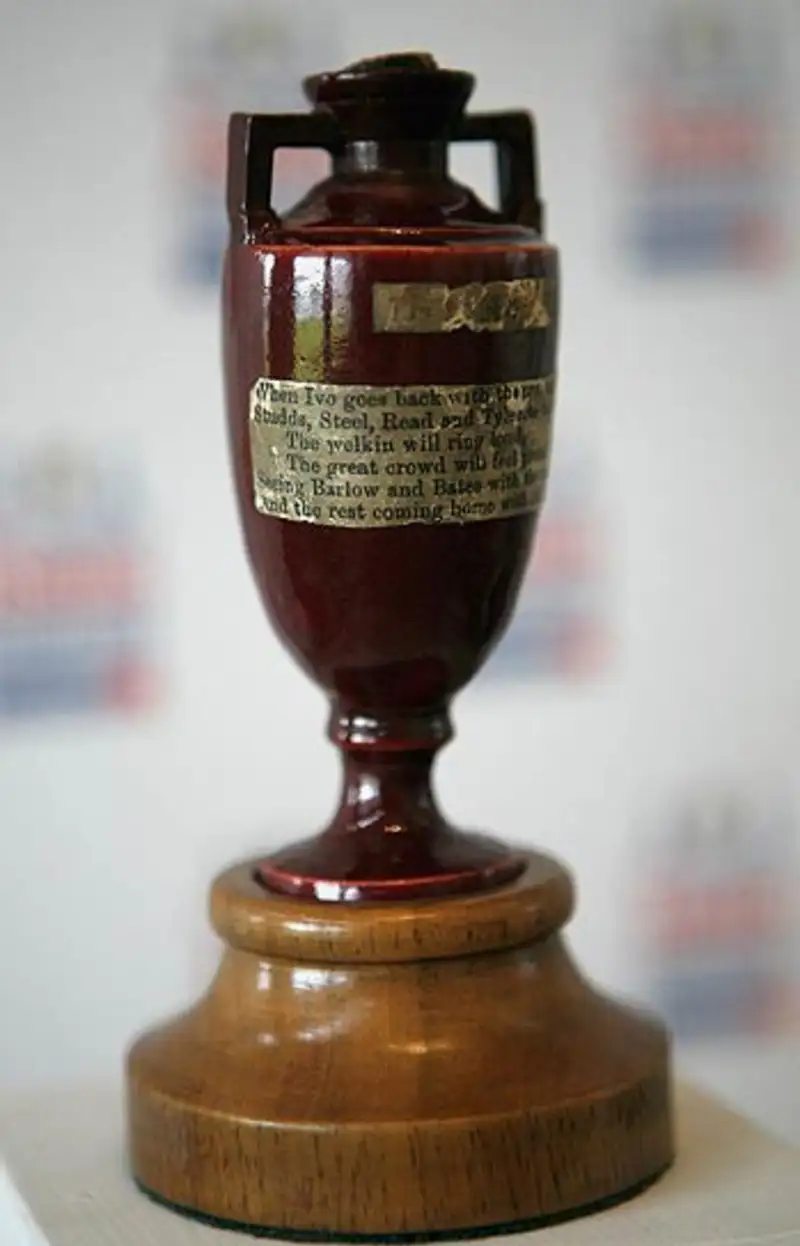
    After England won the third match of that tour, a group of Melbourne women, including Florence Morphy (who would later marry Bligh), presented him with a small terracotta urn believed to contain the ashes of a burnt bail. This was the physical embodiment of Brooks’s joke: the ashes of English cricket, literally in a vessel, headed to Australia by England’s defeated captain.

    When Ivo Bligh died in 1927, Florence donated the urn to the Marylebone Cricket Club at Lord’s, where it remains. The urn itself is now insured for millions and sits in a locked case. No one is allowed to touch it. Yet the rivalry it symbolises is touched every summer when England and Australia meet. It is played for with the intensity reserved for wars that are not wars.

    Why This Matters

    The 1882 Oval Test was not technically a Test match at the time; Test cricket did not officially exist then. Yet it has been retrospectively recognised as a Test by cricket historians. The match was a first-class encounter between two national teams, and that was enough to matter enormously.

    What makes this moment unique is not merely that England lost. It is that a sportswriter’s grief-stricken joke became the naming act of a rivalry that would dominate world cricket for 142 years and counting. The obituary did not describe an existing rivalry; it created one. It transformed a single defeat into a narrative of redemption and national pride that reached across oceans and defined how two nations would compete against each other.

    Spofforth’s bowling that day changed cricket. Brooks’s pen changed how cricket was remembered.


    Sources

  • The Match That Never Finished: Why Cricket Abandoned Tests with No End Date

    The Match That Never Finished: Why Cricket Abandoned Tests with No End Date

    Quick summary (click to reveal)

    Summary: Timeless Tests had no scheduled finish and were supposed to guarantee a result, but the 1939 England-South Africa match at Durban exemplified why they failed: after ten days, England was on the brink of victory when external forces—a war-time boat schedule—forced an abandonment. Post-war boards replaced timeless Tests with the five-day format, which remains the standard today.

    Full article below.

    In March 1939, England and South Africa played a cricket match that was meant to have no end. The Fifth Test of the series, held at Kingsmead in Durban from 3 to 14 March, was designated “timeless”—a format born from an earlier era when cricket refused to acknowledge the clock. After ten days and approximately 46 hours of play, England had amassed 654 for 5 in their second innings and South Africa had scored 481. England needed just 42 more runs to win, with five wickets still in hand. By any cricket logic, they should have won. Instead, the match ended in a draw.

    The reason was not a collapse or a miraculous South African recovery. It was a boat. England’s touring party had to abandon the ground on the tenth day to catch a 1,000-mile train to Cape Town, where they would embark on a steamship home on 17 March. As Norman Gordon began his 93rd eight-ball over, rain fell on Kingsmead. The umpires looked at the clock. England looked at their luggage. The match, which had promised a definitive result, simply stopped. Cricket’s most ambitious format—the timeless Test—had finally run out of time.

    How the Timeless Test Worked

    The timeless Test emerged from the earliest days of international cricket, when the sport’s architects were still negotiating the rules. From 1877 until 1939, a timeless Test had no predetermined finish date. It continued until a result was achieved: one team bowled out twice, or one side could no longer field eleven players. The format reflected a romantic ideal of cricket as a contest that would resolve itself through merit, not the clock.

    This was not a rare experiment. Between 1877 and 1939, there were 99 timeless Tests played worldwide. Australia, in particular, made the format the standard for domestic Test cricket until World War II. Yet here lay an awkward truth: the timeless Test worked. Of those 99 matches, only two ended in a draw—both in 1882 against England, and both abandoned not because cricket had failed but because shipping schedules could not wait.

    The format succeeded partly because of factors that would later vanish. Pitches were left uncovered during play, and in Australian conditions the exposed, well-watered surfaces would dry out, crack, and crumble by the fourth or fifth day. A pitch that had favoured batsmen early in the match would deteriorate and favour spin bowlers later. This natural evolution meant timeless Tests were never truly indefinite. The ground itself imposed a deadline.

    The 1939 Match: When External Time Defeated Cricket Time

    The 1939 Durban Test should never have been played in the timeless format at all. England and South Africa had agreed before the series that if the rubber remained level or if one side held a one-up advantage, the Fifth Test would be timeless. But England had already won the series 1–0. By the rules they had set, a timeless decider was unnecessary. Yet it was played anyway, perhaps as a gesture toward completeness, perhaps in the spirit of a tour’s climax.

    The pitch at Kingsmead proved less punishing than Australian surfaces. Play stretched across ten days without either side collapsing. South Africa made 530 in their first innings; England replied with 654 for 5, declaring to attack. South Africa batted again and reached 481. England’s target was 358, later revised to 355. They had already scored 316 before South Africa’s first innings, so they needed fewer than 42 runs in their final pursuit.

    What happened next would reverberate through cricket history. As England edged closer, as Norman Gordon approached the end of his enormous bowling load, the weather turned. Rain fell. The field became unplayable. And England had to leave. The boat was real. The war, now months away, was real. The timeless Test, which had weathered 62 years of cricket, could not withstand a single steamship schedule.

    Why Timeless Tests Disappeared

    The 1939 match was the death knell, but the format did not die alone. World War II intervened. When Test cricket resumed in 1946, boards on both sides of the world had learned a lesson: timeless matches were incompatible with the modern world. Travel was rigid. Tours were scheduled. Shipping departed on fixed dates.

    There was brief resistance. In October 1945, the Australian Cricket Board expressed a desire to retain the timeless format for Ashes deciders. The Marylebone Cricket Club in England firmly rejected the idea. By the time England toured Australia in 1946–47, both boards had agreed: Tests would have a five-day time limit. By 1948, the compromise was abandoned entirely. All Test cricket adopted the five-day standard.

    The decision was justified by more than logistics. The public, it was argued, had warmed to shorter, brighter cricket during the war years. There was an appetite for a format that could be consumed in a defined window. Modern pitch preparation—covered wickets, better machinery, more scientific maintenance—meant that pitches no longer deteriorated predictably. A timeless Test could now genuinely stretch indefinitely, a prospect that terrified administrators trying to schedule multiple series across multiple countries in a single season.

    The Counterfactual

    What would have happened had England had another half-hour? The answer remains in the realm of cricket fantasy. Batsman Wilf Edrich believed England would have won. Wicketkeeper Les Ames felt they were “in with a good chance.” South African Dudley Nourse countered that the pitch would have deteriorated further, becoming a “sticky” nightmare for England’s batsmen on the eleventh day.

    The truth is unknowable. But the question itself—”What if?”—captures why timeless Tests ultimately failed. They promised certainty, a match that would run until a clear winner emerged. Instead, they exposed cricket’s vulnerability to forces beyond the boundary: war, travel, weather, and the rising commercial demands of an international schedule. The timeless Test never ran out of cricket. It ran out of everything else.


    Sources