Quick summary (click to reveal)
Summary: The NFL hosts its first Australian regular-season game in Melbourne on 11 September at 10:35 a.m. local time. Cricket's dominance in Australia is not a monopoly—AFL and NRL split audiences by region—but cricket uniquely transcends those divides as a summer unifier. The real question is whether the NFL can overcome the time-zone barrier and build sustained interest, not whether it will dethrone cricket.
Full article below.
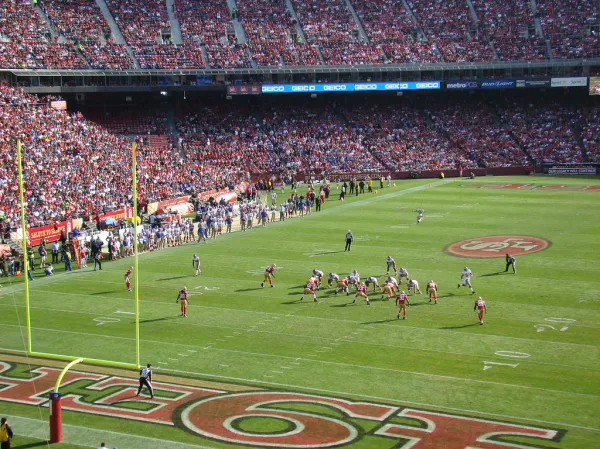
At 10:35 a.m. on Friday, 11 September, the San Francisco 49ers and Los Angeles Rams will take the field at the Melbourne Cricket Ground. Millions of Australians will wake to the sound of an American game on Netflix—the NFL’s first-ever regular-season contest on Australian soil. It is, by any measure, an audacious bet. And it arrives at a moment when the league is reckoning with a simple fact: American football has conquered North America and is now hunting for growth everywhere else.
But Australia is not a blank market waiting to be converted. It is a nation where sport is not merely entertainment—it is identity, geography and season. The AFL dominates Victoria, South Australia and Western Australia with the devotion of religion. Rugby league owns the fortress of New South Wales and Queensland. Yet as these winter codes compete ferociously for territory and television dollars, cricket does something none of them can quite manage: it unifies the country. The question the NFL now faces is not whether it will dethrone cricket. It is whether a morning kickoff in a foreign time zone can even get a foothold in a nation that already knows what it loves.
Why Cricket Dominates—But Not Absolutely
The first thing to understand about Australian sport is that it has no single king. AFL reigns in the south and west. Rugby league dominates the north and east. But cricket, which runs through the Australian summer, transcends these geographic and code-based tribes. It is the great unifier.
The numbers back this. The Big Bash League averages 21,263 spectators per match, placing it second only to the AFL in total attendance across Australian sports. Since the BBL’s launch in 2011, cricket has grown faster than the A-League, with bigger crowds, higher ratings and stronger year-on-year growth. Grassroots participation in cricket rose 11 per cent to nearly 599,000 players in 2022. And crucially, 62 per cent of Cricket Australia’s revenue comes from media rights sales—a figure that reflects the sport’s institutional power and the appetite of broadcasters to acquire its content.
But here is the important caveat: cricket’s strength is not unshakeable dominance. It is unifying power. The AFL and NRL split Australia’s audience by season and geography in ways cricket cannot penetrate. What cricket does instead is transcend those fault lines. It belongs to summer, to everyone, and to a national identity that stretches back to the colonial era.
The NFL’s Eight-Year Blueprint
The NFL did not arrive in Australia with a single game. It has been planning this moment since the early 2020s. In 2022, the league opened an office in Australia and appointed Charlotte Offord, a New Zealand native, as general manager for the region. By 2025, it had launched an NFL Academy on the Gold Coast, targeting student athletes aged 12 to 18. And it had grown its Australian and New Zealand fan base from 6 million to 8.8 million in three years—a 47 per cent increase.
This follows a proven model. The NFL began testing the international market with pre-season exhibition games in the 1990s in the UK, Canada and Japan. By 2007, it had moved to regular-season games in London. Today, London hosts three games per season. The success of that market has created a template: Germany, Brazil, Spain and now Australia. NFL Commissioner Roger Goodell has publicly stated his ambition to expand the international schedule to 16 games per season.
Outside London, Australia is receiving the greatest investment. The reasons are strategic: a vibrant sports culture, English-language fluency, and proximity to an Asian market the NFL is keen to develop. The appointment of Offord, the opening of the Academy, the flag football rollout, and now the Netflix broadcast deal all signal an institution that is serious about root growth, not just a one-off spectacle.
The Time-Zone Problem Nobody Has Solved
And yet: the Melbourne game kicks off at 10:35 a.m. on a Friday morning. This is not an accident. It is the price the NFL pays for American primetime. Games timed for U.S. evening audiences land in the middle of the night in Europe and in the Australian morning. Growing a sport globally while catering broadcast schedules to a single nation’s preferences is a structural constraint that money and marketing cannot fully overcome.
For a sport trying to build sustained interest in a market thousands of miles away, time zones are not a minor inconvenience. They are a genuine barrier to habit formation. A casual viewer in Melbourne cannot easily settle into a Friday morning routine around American football the way Londoners, over 18 years of games, have learned to do. The NFL has tools—Netflix, global marketing budgets, academy development, partnerships—but it does not have the luxury of time-zone alignment. That is a disadvantage no expansion playbook can entirely mitigate.
What This Reveals About Sport’s New Geography
The Melbourne game is not a threat to cricket’s dominance in Australia. It is a window into how modern sports leagues compete for marginal growth in a fragmented global market. The NFL is not trying to replace the AFL, NRL or cricket. It is trying to carve out a beachhead among a generation of Australians who consume sports differently than their parents did—via streaming, at odd hours, across multiple codes simultaneously.
What the game does reveal is that sports power is increasingly distributed by season, by time zone, by streaming infrastructure and by the capacity to build grassroots academies. The NFL can afford to take losses on international expansion because it is saturated at home. Cricket, by contrast, does not need to expand internationally to thrive in Australia—it already unifies the nation every summer.
The real question is not whether the NFL will dethrone cricket. It is whether it can convert a Friday-morning audience into a genuine, season-by-season fanbase. That requires more than a single game on Netflix. It requires the kind of sustained institutional presence the NFL is, in fact, building. Whether it works is an open question. But if it does, it will not be because American football supplanted an Australian summer tradition. It will be because the NFL found a way to exist alongside it—a winter sport borrowing a summer slot, broadcast at an inconvenient hour, betting that enough Australians care about what happens in an American stadium to make the appointment worthwhile.
Sources
- NFL Melbourne Game Announcers: 2026 Broadcast Team – Netflix Tudum
- Watch NFL Melbourne Game | Netflix Official Site
- NFL on Netflix 2026 Schedule: Australia Game, Thanksgiving Eve, Christmas, Week 18, and NFL Honors – Netflix Tudum
- Netflix Announce NFL Partnership with Landmark Melbourne Game in 2026 – Ministry of Sport
- Netflix Sets On-Air Team for First-Ever Regular Season NFL Game in Australia on Sept. 10 – Media Play News
- NFL on Netflix 2026: Full Schedule, Matchups, Dates & How to Watch – Netflix Tudum
- Netflix will air NFL 2026 season opener, first game ever played in Australia
- Netflix NFL Melbourne Game Sets Broadcast Team