Category: Australia

  • India’s Historic 2001 Eden Gardens Victory: How Laxman and Dravid Broke Australia’s 16-Match Winning Streak

    India’s Historic 2001 Eden Gardens Victory: How Laxman and Dravid Broke Australia’s 16-Match Winning Streak

    Quick summary (click to reveal)

    Summary: India defeated Australia by 171 runs in March 2001 at Eden Gardens, ending Australia's 16-consecutive Test-match winning streak. After being forced to follow on, Laxman (281) and Dravid (180) built a 376-run partnership for the fifth wicket that transformed the match, enabling India to declare at 657 for 7 and set Australia an unattainable target.

    Full article below.

    On 15 March 2001, at the Eden Gardens in Kolkata, India achieved something that few teams manage: they beat an all-conquering Australia after being forced to follow on. Steve Waugh’s side had won 16 consecutive Tests and arrived in India expecting a 17th. Instead, they left having handed the initiative to a resurgent Indian team that would go on to level the series and rewrite the narrative of subcontinental cricket.

    The victory hinged on two men, a single partnership and a decision that looked catastrophic until it became transcendent. It remains one of Test cricket’s defining moments—not because of an umpiring error or a lucky break, but because two batsmen chose to bat through cramps, exhaustion and mounting pressure to prove that no match is over until the last ball is bowled.

    Australia’s ambush and India’s collapse

    Australia batted first and posted 445, a total that looked decisive on a deteriorating Eden Gardens pitch. India responded with just 171, a gap of 274 runs. Steve Waugh, sensing total control, enforced the follow-on without hesitation. It was the logical move: India would bat again, likely fold again, and Australia would move within touching distance of an unprecedented 17th straight win.

    What made the decision appear even safer was India’s injury toll. VVS Laxman, the elegant left-hander who would become the fulcrum of India’s resistance, was playing despite a back injury that nearly kept him out entirely. By the time India took the field to bat again following the follow-on, few observers gave them a realistic chance.

    Harbhajan’s counter-punch and Laxman’s rise

    India’s only bright spot in their first innings had been Harbhajan Singh’s bowling. The off-spinner took a hat-trick on Day 1, a moment of defiance that hinted at what was to come. When Australia batted their second innings, Harbhajan returned with even greater effect: 6 wickets for 73 runs saw Australia collapse to 212, suddenly making the target for India’s continuation less insurmountable than it had appeared.

    By the end of Day 4, India had reached 254 for 4 in their follow-on innings. Laxman, carrying his injury, had accumulated 109. Dravid was just beginning to settle into his innings. What unfolded over the next 24 hours would reshape the Indian team’s self-belief and alter the trajectory of the India-Australia rivalry.

    The partnership that broke a streak

    Laxman and Dravid came together and refused to be separated. Batting through cramps against McGrath, Warne and a hostile Australian attack, they added 376 runs—a partnership that remains India’s highest for the 5th wicket in Test cricket. Laxman scored 281 across eight and a half hours; Dravid’s 180 represented eight hours of unrelenting concentration against bowlers determined to defend Australia’s streak.

    The numbers tell only part of the story. Dravid faced 353 deliveries. Both men suffered cramps. The Australian bowlers, who had dominated for 16 straight Tests, found themselves unable to find a way through. India declared on 657 for 7, setting Australia a target of 384. Australia’s final attempt produced 212, leaving India victorious by 171 runs.

    Why it mattered beyond the scoreboard

    The significance of India’s victory extended far beyond the scoreline. Australia’s 16-match winning streak had created a mythology of invincibility across world cricket. The 2001 Eden Gardens Test shattered it in a single week.

    For India’s captain Sourav Ganguly, who was still establishing his leadership, the win was transformative. For Laxman, it announced his arrival as a batsman capable of single-handedly changing a match. For Indian cricket itself, it signalled that the subcontinent could compete with the world’s best on even terms, and that character and partnership could overcome tactical brilliance.

    Australia would continue to win Tests, but never again with quite the same aura of inevitability. India had proven that no match is truly over until the last ball is bowled. The lesson was learned, and Test cricket moved into a new era.


    Sources

  • The One-Run Escape: West Indies’ Final Victory Over Australia in 1993

    The One-Run Escape: West Indies’ Final Victory Over Australia in 1993

    Quick summary (click to reveal)

    Summary: West Indies won the fourth Test of the 1993 series at Adelaide by one run, with Australia needing just two more runs when McDermott was dismissed in the final over. It remains Test cricket's narrowest victory margin and marked a turning point in the West Indies' dominance.

    Full article below.

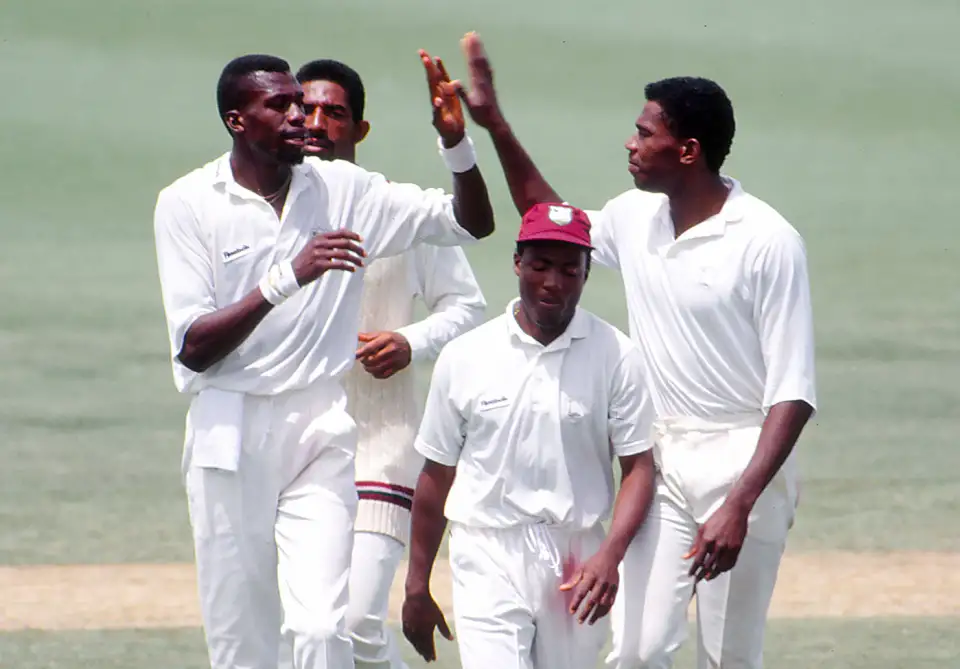
    On 26 January 1993, the fourth Test at Adelaide Oval became the site of Test cricket’s narrowest victory: West Indies defeated Australia by a single run. With Australia needing just two runs and Craig McDermott at the crease, the match ended in devastating fashion for Allan Border’s side, marking a crucial moment in an increasingly competitive series between the two nations.

    Australia arrived at Adelaide with the series still contested. The West Indies team that summer was depleted—missing Malcolm Marshall and Gordon Greenidge—and skippered by Richie Richardson. Under Border’s leadership and bolstered by a developing pace attack featuring Shane Warne, Australia believed they could break through. Warne’s performances earlier in the tour had given Australia genuine hope. The Frank Worrell Trophy remained the prize both teams sought.

    A Tightly Contested Match

    The Adelaide Test unfolded as a low-scoring contest. West Indies posted 213 and 184; Australia replied with 252. Curtly Ambrose’s bowling kept both teams’ scorecards modest—he would take 10 wickets for the match, finishing the series among the leading wicket-takers. When West Indies collapsed to 184 in their second innings, Australia were set a target of 186.

    The Australian reply began poorly. By mid-afternoon on day four, the home side had slumped to 102 for 8. The familiar pattern seemed to be reasserting itself. Yet what followed was unexpected resilience. Justin Langer provided determined batting. Tim May offered steady lower-order support. Together they clawed back toward the target with growing intensity.

    The Final Over

    As the afternoon wore on, Australia edged closer to an unlikely victory. With McDermott at the crease and just two runs required, the match entered its climactic phase. The West Indies bowlers held their nerve in the final overs. McDermott was dismissed in the decisive moment, and West Indies had held on by one run.

    The margin was unprecedented. No team had ever won a Test match by a single run before. For Australia, it was an agonising defeat—they had mounted a genuine challenge to West Indies’ traditional dominance, only to fall at the final moment.

    The Aftermath

    The Adelaide victory became one of the series’ defining moments, a narrow, hard-fought success that demonstrated the West Indies’ ability to prevail under extreme pressure. The one-run margin would remain one of sport’s most dramatic conclusions, a reminder that in Test cricket, the smallest margins sometimes carry the most weight.


    Sources

  • The Obituary That Launched The Ashes: How England’s 7-Run Loss Became Cricket’s Greatest Rivalry

    The Obituary That Launched The Ashes: How England’s 7-Run Loss Became Cricket’s Greatest Rivalry

    Quick summary (click to reveal)

    Summary: England lost to Australia by 7 runs at The Oval on 29 August 1882, their first defeat on home soil. A satirical obituary in The Sporting Times on 2 September 1882 mocked the loss by declaring English cricket dead and its ashes bound for Australia. That obituary spawned the name and concept of The Ashes rivalry, formalized a year later when England's captain received a small urn in Australia.

    Full article below.

    On the afternoon of 29 August 1882, at Kennington Oval in London, the English cricket establishment suffered an indignity that would redefine international cricket for the next 142 years: they lost to Australia on home soil for the first time. The defeat was narrow—Australia won by just 7 runs—but the wound was deep. England, the birthplace and master of the game, had been beaten at their own ground by a colonial outpost. Within four days, an English journalist named Reginald Shirley Brooks would turn that humiliation into immortality.

    What began as satire became sport’s greatest rivalry. The Sporting Times published Brooks’s mock obituary on 2 September 1882. It read: “In affectionate remembrance of English Cricket, which died at the oval on 29th August, 1882. Deeply lamented by a large circle of sorrowing friends and acquaintances. R.I.P. N.B. — The body will be cremated and the ashes taken to Australia.” That single joke, published in the aftermath of a shocking loss, named a rivalry that still commands global attention. It is The Ashes.

    How England Lost What Should Have Been Easy

    Australia arrived at The Oval needing everything to go right. They had scored only 63 in their first innings. England, batting second, needed just 85 to win. The mathematics favoured the home side overwhelmingly.

    But cricket, as it often does, defied arithmetic. England reached 51 for 2 wickets—needing only 34 more runs—and appeared certain to win. Then W.G. Grace, the most celebrated batsman in England, was dismissed for 32. What followed was systematic destruction. The Australian fast bowler Fred Spofforth, operating at lethal pace, dismantled the rest of the English batting order with figures of seven for 44. England limped to 77 all out, falling 8 runs short of victory.

    The crowd at The Oval fell briefly silent at the final dismissal. Then they surged onto the field, not in mourning but in recognition of something extraordinary: they had witnessed the upset that would reshape cricket history. The Australian players—Spofforth and Boyle especially—were chaired to the pavilion by cheering spectators.

    A Joke Becomes a Crown

    The Sporting Times obituary was meant to sting. It did. But it also did something unexpected: it crystallised English cricket’s response. Rather than sulk, the English cricket authorities seized on the rhetoric of restoration. When England’s captain, Ivo Bligh, led a tour of Australia in the 1882–83 season with the explicit aim of recovering “those Ashes,” everyone understood the reference. The satirical funeral notice had become a battle standard.

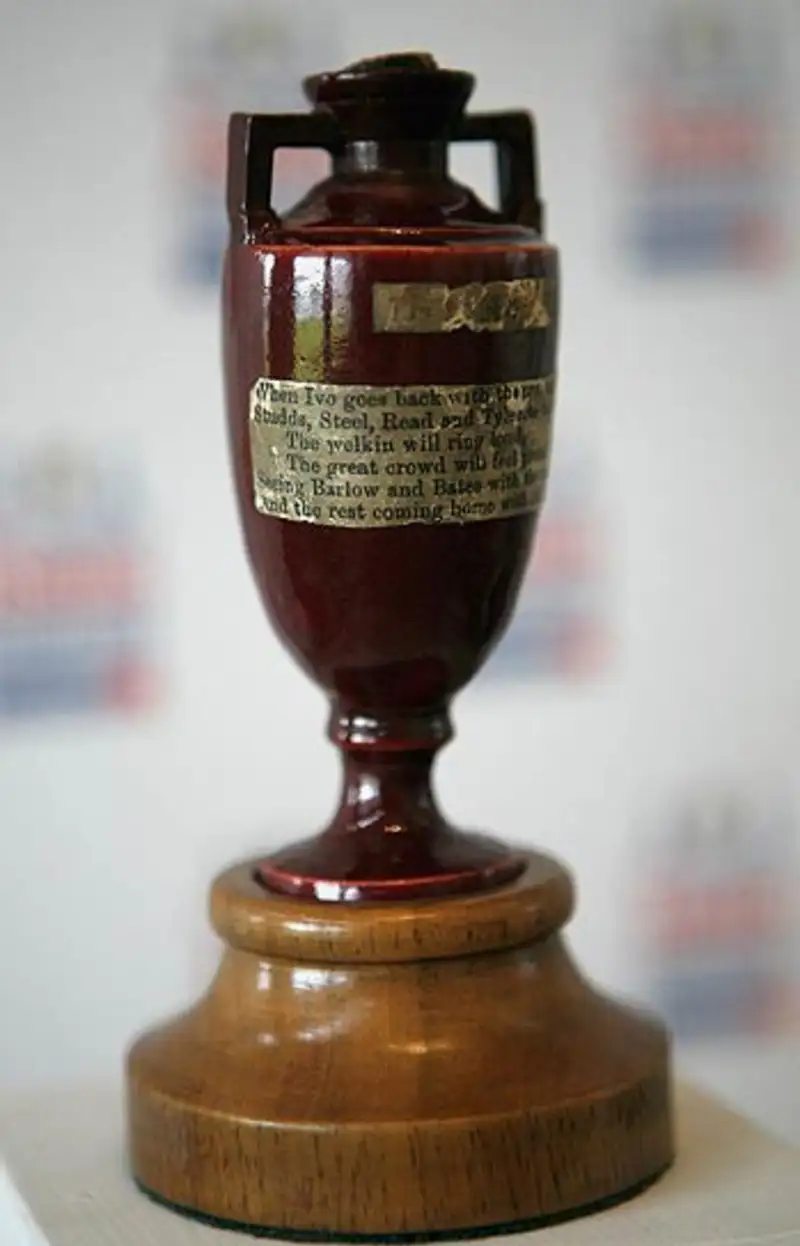
    After England won the third match of that tour, a group of Melbourne women, including Florence Morphy (who would later marry Bligh), presented him with a small terracotta urn believed to contain the ashes of a burnt bail. This was the physical embodiment of Brooks’s joke: the ashes of English cricket, literally in a vessel, headed to Australia by England’s defeated captain.

    When Ivo Bligh died in 1927, Florence donated the urn to the Marylebone Cricket Club at Lord’s, where it remains. The urn itself is now insured for millions and sits in a locked case. No one is allowed to touch it. Yet the rivalry it symbolises is touched every summer when England and Australia meet. It is played for with the intensity reserved for wars that are not wars.

    Why This Matters

    The 1882 Oval Test was not technically a Test match at the time; Test cricket did not officially exist then. Yet it has been retrospectively recognised as a Test by cricket historians. The match was a first-class encounter between two national teams, and that was enough to matter enormously.

    What makes this moment unique is not merely that England lost. It is that a sportswriter’s grief-stricken joke became the naming act of a rivalry that would dominate world cricket for 142 years and counting. The obituary did not describe an existing rivalry; it created one. It transformed a single defeat into a narrative of redemption and national pride that reached across oceans and defined how two nations would compete against each other.

    Spofforth’s bowling that day changed cricket. Brooks’s pen changed how cricket was remembered.


    Sources

  • 10:35 a.m. Friday: Why the NFL’s Melbourne gamble reveals cricket’s real power in Australia

    10:35 a.m. Friday: Why the NFL’s Melbourne gamble reveals cricket’s real power in Australia

    Quick summary (click to reveal)

    Summary: The NFL hosts its first Australian regular-season game in Melbourne on 11 September at 10:35 a.m. local time. Cricket's dominance in Australia is not a monopoly—AFL and NRL split audiences by region—but cricket uniquely transcends those divides as a summer unifier. The real question is whether the NFL can overcome the time-zone barrier and build sustained interest, not whether it will dethrone cricket.

    Full article below.

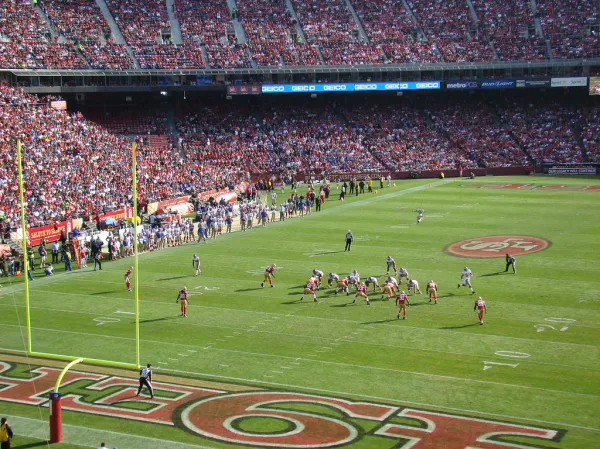
    At 10:35 a.m. on Friday, 11 September, the San Francisco 49ers and Los Angeles Rams will take the field at the Melbourne Cricket Ground. Millions of Australians will wake to the sound of an American game on Netflix—the NFL’s first-ever regular-season contest on Australian soil. It is, by any measure, an audacious bet. And it arrives at a moment when the league is reckoning with a simple fact: American football has conquered North America and is now hunting for growth everywhere else.

    But Australia is not a blank market waiting to be converted. It is a nation where sport is not merely entertainment—it is identity, geography and season. The AFL dominates Victoria, South Australia and Western Australia with the devotion of religion. Rugby league owns the fortress of New South Wales and Queensland. Yet as these winter codes compete ferociously for territory and television dollars, cricket does something none of them can quite manage: it unifies the country. The question the NFL now faces is not whether it will dethrone cricket. It is whether a morning kickoff in a foreign time zone can even get a foothold in a nation that already knows what it loves.

    Why Cricket Dominates—But Not Absolutely

    The first thing to understand about Australian sport is that it has no single king. AFL reigns in the south and west. Rugby league dominates the north and east. But cricket, which runs through the Australian summer, transcends these geographic and code-based tribes. It is the great unifier.

    The numbers back this. The Big Bash League averages 21,263 spectators per match, placing it second only to the AFL in total attendance across Australian sports. Since the BBL’s launch in 2011, cricket has grown faster than the A-League, with bigger crowds, higher ratings and stronger year-on-year growth. Grassroots participation in cricket rose 11 per cent to nearly 599,000 players in 2022. And crucially, 62 per cent of Cricket Australia’s revenue comes from media rights sales—a figure that reflects the sport’s institutional power and the appetite of broadcasters to acquire its content.

    But here is the important caveat: cricket’s strength is not unshakeable dominance. It is unifying power. The AFL and NRL split Australia’s audience by season and geography in ways cricket cannot penetrate. What cricket does instead is transcend those fault lines. It belongs to summer, to everyone, and to a national identity that stretches back to the colonial era.

    The NFL’s Eight-Year Blueprint

    The NFL did not arrive in Australia with a single game. It has been planning this moment since the early 2020s. In 2022, the league opened an office in Australia and appointed Charlotte Offord, a New Zealand native, as general manager for the region. By 2025, it had launched an NFL Academy on the Gold Coast, targeting student athletes aged 12 to 18. And it had grown its Australian and New Zealand fan base from 6 million to 8.8 million in three years—a 47 per cent increase.

    This follows a proven model. The NFL began testing the international market with pre-season exhibition games in the 1990s in the UK, Canada and Japan. By 2007, it had moved to regular-season games in London. Today, London hosts three games per season. The success of that market has created a template: Germany, Brazil, Spain and now Australia. NFL Commissioner Roger Goodell has publicly stated his ambition to expand the international schedule to 16 games per season.

    Outside London, Australia is receiving the greatest investment. The reasons are strategic: a vibrant sports culture, English-language fluency, and proximity to an Asian market the NFL is keen to develop. The appointment of Offord, the opening of the Academy, the flag football rollout, and now the Netflix broadcast deal all signal an institution that is serious about root growth, not just a one-off spectacle.

    The Time-Zone Problem Nobody Has Solved

    And yet: the Melbourne game kicks off at 10:35 a.m. on a Friday morning. This is not an accident. It is the price the NFL pays for American primetime. Games timed for U.S. evening audiences land in the middle of the night in Europe and in the Australian morning. Growing a sport globally while catering broadcast schedules to a single nation’s preferences is a structural constraint that money and marketing cannot fully overcome.

    For a sport trying to build sustained interest in a market thousands of miles away, time zones are not a minor inconvenience. They are a genuine barrier to habit formation. A casual viewer in Melbourne cannot easily settle into a Friday morning routine around American football the way Londoners, over 18 years of games, have learned to do. The NFL has tools—Netflix, global marketing budgets, academy development, partnerships—but it does not have the luxury of time-zone alignment. That is a disadvantage no expansion playbook can entirely mitigate.

    What This Reveals About Sport’s New Geography

    The Melbourne game is not a threat to cricket’s dominance in Australia. It is a window into how modern sports leagues compete for marginal growth in a fragmented global market. The NFL is not trying to replace the AFL, NRL or cricket. It is trying to carve out a beachhead among a generation of Australians who consume sports differently than their parents did—via streaming, at odd hours, across multiple codes simultaneously.

    What the game does reveal is that sports power is increasingly distributed by season, by time zone, by streaming infrastructure and by the capacity to build grassroots academies. The NFL can afford to take losses on international expansion because it is saturated at home. Cricket, by contrast, does not need to expand internationally to thrive in Australia—it already unifies the nation every summer.

    The real question is not whether the NFL will dethrone cricket. It is whether it can convert a Friday-morning audience into a genuine, season-by-season fanbase. That requires more than a single game on Netflix. It requires the kind of sustained institutional presence the NFL is, in fact, building. Whether it works is an open question. But if it does, it will not be because American football supplanted an Australian summer tradition. It will be because the NFL found a way to exist alongside it—a winter sport borrowing a summer slot, broadcast at an inconvenient hour, betting that enough Australians care about what happens in an American stadium to make the appointment worthwhile.


    Sources

  • Don Bradman’s 99.94 Average: The 40-Run Gap That No Modern Batter Can Close

    Don Bradman’s 99.94 Average: The 40-Run Gap That No Modern Batter Can Close

    Quick summary (click to reveal)

    Summary: Don Bradman's Test average of 99.94 is nearly 40 runs ahead of the second-best completed career (low 60s). Statistical analysis gives him a Z-score of 6.6—far beyond the normal outlier threshold of 3.0—making him a genuine anomaly. Modern bowling specialisation, varied opposition, and field tactics have prevented any contemporary player from approaching this gap.

    Full article below.

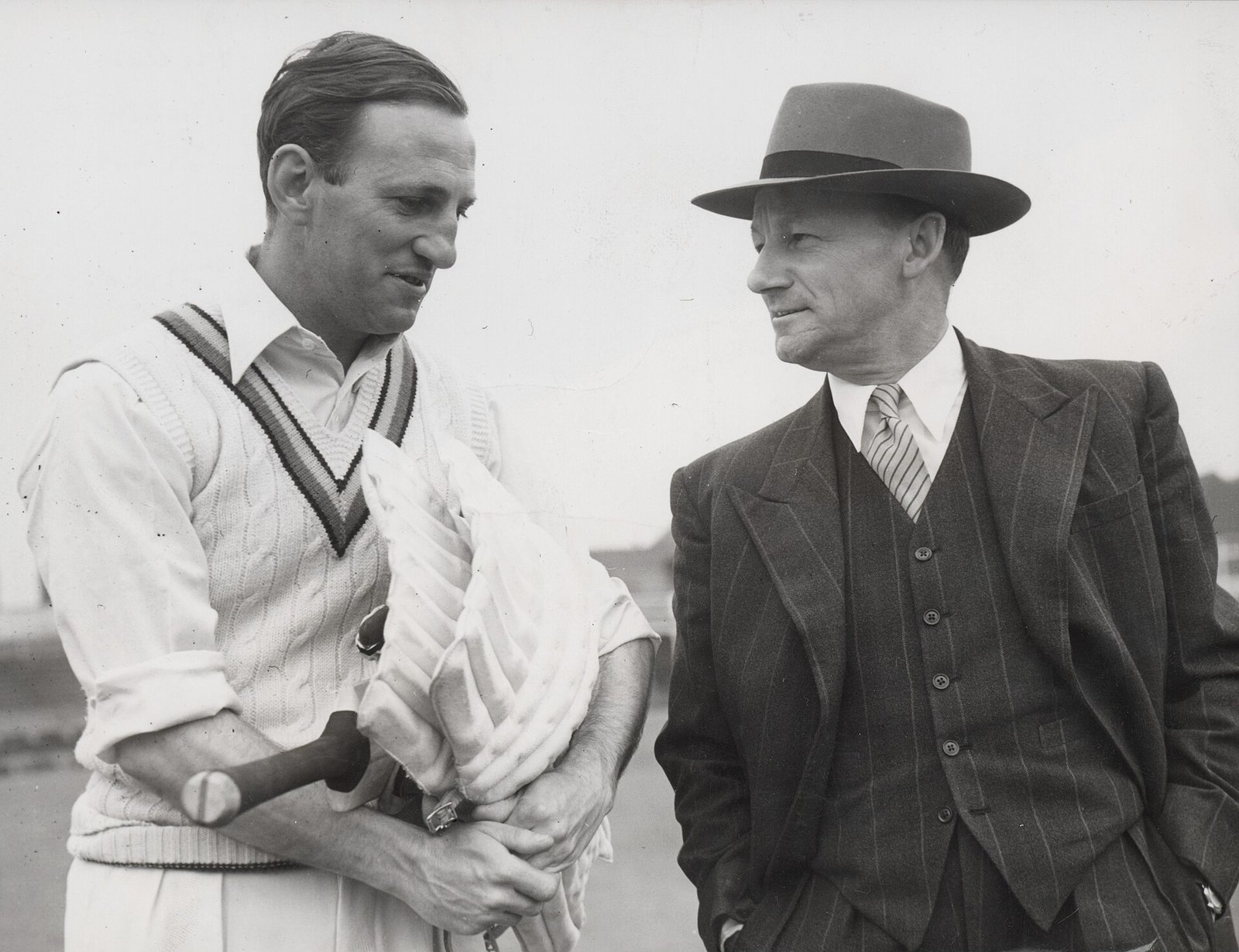
    When Don Bradman walked to the crease for the final time, on 14 August 1948 at the Kennington Oval, he needed just 4 runs to retire with a Test average of 100.00. Instead, England leg-spinner Eric Hollies delivered a second-ball duck. Bradman spent 60 seconds in the middle and departed with 99.94—a number that has haunted cricket statistics ever since, not as a near-miss, but as a fortress that no batter in the 75 years since has come close to breaching.

    His Test career average sits almost 40 runs ahead of the second-best completed average in cricket history. That gap is not merely large; it is structurally anomalous. Statistical analysis reveals Bradman operates in a separate statistical universe from every other batsman—a mathematical outlier so extreme that removing him from the dataset restores normal distribution to the entire elite batting population.

    The Numbers That Define an Outlier

    Bradman played 52 Tests across 80 innings between 1928 and 1948, accumulating 6,996 runs and 29 centuries. Those figures alone do not explain his dominance. The pattern does.

    He scored a century almost every third time he walked to the crease—a rate of one hundred every 1.79 Tests. The next-best competitor, Matthew Hayden, achieved one every 3.43 Tests. Bradman’s double-hundred rate was even more startling: 12 in 80 innings, one every 6.67 times at bat. His first-class record—28,067 runs at 95.14 across all competitions—confirms this was no Test-only illusion.

    The statistical measure that best captures his separation from peers is the Z-score, which expresses how many standard deviations a data point sits from the mean. A Z-score above 3.0 is considered extreme. Bradman’s is 6.6. Once Bradman is removed from the dataset, elite batting averages follow a predictable, normal distribution. Reintroduce him, and the curve fractures.

    An Era of Uncovered Pitches and Bodyline

    Bradman batted on uncovered, unpredictable pitches with minimal protective equipment. England devised Bodyline—a tactic dedicated solely to containing him—and still he averaged 56.57 in that 1932–33 series. His nearest contemporary, Walter Hammond of England, finished his Test career with 22 hundreds at an average around 58, nearly 40 runs shy of Bradman despite playing in the same era.

    He also lost five years to World War II. When international cricket resumed in 1946, he returned immediately with scores of 187 and 234 in consecutive Tests. His pre-war average was 97.94—suggesting that even interrupted, his trajectory was unchecked.

    Why Modern Cricket Cannot Replicate It

    No modern batter has come remotely close. Steve Smith, widely considered the finest batsman of his generation, carries a career Test average of 56.97. Virat Kohli, Sachin Tendulkar, Ricky Ponting—all era-defining athletes—cluster in the mid-to-high 50s. None break 60.

    Modern international cricket presents structural barriers Bradman never faced: specialised bowling attacks across multiple nations, varied field placements, standardised pitch preparation, and the psychological weight of constant footage analysis and comparison. Protective equipment and DRS technology have not lifted elite averages; they remain stable in the 50s-to-low-60s range.

    Bradman’s career-high ICC Test Rating of 961—the highest ever recorded for any batter—illustrates the gap further. Steve Smith’s personal best is 947. Only 32 batters in Test history have ever breached a rating of 900, the mark of all-time greatness.

    A Record Secured by One Ball

    The final duck stands as the most fitting epilogue. Bradman retired not with a century, not with a record-breaking average of 100, but with 99.94—close enough to perfection to feel unreachable, far enough to remain forever incomplete. That incompleteness is what makes the number unassailable. Had he scored 4 runs, his average would have risen to exactly 100. Instead, his 60-second dismissal locked him at 99.94, a figure so specific, so mathematically dominant, and so historically untouchable that it has become less a record and more a statistical constant—the ceiling against which all future greatness must measure itself and inevitably fall short.


    Sources

  • Test Cricket’s First Tie: How the Impossible Happened at Brisbane in 1960

    Test Cricket’s First Tie: How the Impossible Happened at Brisbane in 1960

    Quick summary (click to reveal)

    Summary: On 14 December 1960, Australia and West Indies tied their Test at Brisbane—the first tie in 148 years of Test cricket. Australia needed 233 to win, collapsed to 92 for 6, then recovered through a 134-run partnership between Richie Benaud and Alan Davidson, only to lose Ian Meckiff to a run-out from Joe Solomon's direct hit with the scores level. Only one other tie has occurred in Test cricket since.

    Full article below.

    On the final afternoon of the first Test at Brisbane’s Gabba on 14 December 1960, Test cricket witnessed an outcome so rare that it would not happen again for another 26 years. Australia and West Indies ended their match with identical scores—each team having completed their innings—making the Tied Test the first, and still one of only two, such results in 148 years of the sport’s oldest format.

    It was not a draw. A draw requires the batting side to refuse a result; a tie demands equal runs and a completed fourth innings. The statistical improbability is matched only by the drama that preceded it: a West Indies team that looked destined for victory, an Australian collapse, a miraculous recovery, and a run-out that sealed the impossible on the final ball.

    The Setup: A Series Turned Upside Down

    The West Indies arrived in Australia for their first tour in December 1960 under Frank Worrell’s captaincy—itself a watershed moment in Caribbean cricket, as all previous West Indies captains had been white. They batted first and totalled 453, built on centuries from Garry Sobers (132) and contributions from Frank Worrell (65) and Joe Solomon (65). Australia replied with 505, anchored by Norm O’Neill’s 181 and Bob Simpson’s 92.

    The West Indies’ second innings yielded 284, setting Australia a target of 233. On paper, it was eminently achievable. In practice, it became a chase that defied probability.

    Collapse and Counter-Attack

    Wes Hall’s pace bowling decimated Australia’s middle order in the second innings. By the time Australia had reached 92 for 6, the West Indies seemed certain victors. The home team was crumbling, and there appeared no path to the required runs.

    Then came one of cricket’s great recoveries. Richie Benaud and Alan Davidson engineered a 134-run partnership that tilted the entire match towards Australia. The momentum swung so decisively that, with two balls remaining, the West Indies faced the genuine prospect of defeat.

    But Test cricket rarely offers safe resolutions, especially when so much drama remains.

    The Final Over: When All Outcomes Were Possible

    As the final over commenced, the scores were level. Both outcomes—an Australian victory or a West Indies win—remained mathematically possible within the space of a handful of deliveries. Such was the compression of possibility that, in the minutes before the end, a draw or even a tie had entered the conversation alongside the conventional results.

    Ian Meckiff was run out from Joe Solomon’s direct hit from square-leg on a ball that left the scores exactly level. The fourth innings was complete, and neither team had secured victory. Test cricket’s first tie had occurred.

    Legacy and Rarity

    Only one other tied Test has occurred since December 1960—a 26-year gap that emphasises the rarity of the outcome. Of the more than 2,570 Tests played since 1877, a tied result remains an extreme outlier, a reminder of how seldom cricket’s mathematics align so perfectly and how unusual it is for a result to hang on a single dismissal in the final moments of play.

    The West Indies lost the series 2–1, but the tour galvanised cricket in Australia. The team was paraded through Melbourne in open-top cars on 17 February 1961 to crowds that reflected their popularity and the excitement they had generated. Frank Worrell’s captaincy and the team’s attacking cricket—embodied by Sobers’ stroke-play and the pace of Wes Hall—captured Australian hearts and helped revitalise interest in international Test cricket at a time when the format needed oxygen.

    The Tied Test of Brisbane 1960 remains the most compelling argument for why Test cricket, at its finest, can compress an entire psychological journey—hope, despair, defiance, and heartbreak—into five days and a single, unforgettable run-out.


    Sources