Quick summary (click to reveal)
Summary: Reverse swing occurs when a cricket ball is aged and bowled at high speed (above 85 mph). The rough side causes air to separate early, while the smoother side holds air longer, reversing the pressure difference and making the ball swing toward the rougher side instead of the shiny one.
Full article below.
A cricket ball bowled at conventional swing obeys a principle that feels intuitive: the shiny side deflects airflow, and the ball curves toward the smooth surface. But reverse that ball’s age and the bowler’s pace, and something counterintuitive happens. The ball veers toward its roughest, most battered side instead.
For decades, this reversal looked suspicious. Players and commentators assumed reverse swing could only be achieved through illegal tampering—scratching the leather with sandpaper, bottle caps or fingernails. Cricket’s authorities were baffled. Then aerodynamicists stepped in and proved the physics was real. Today, reverse swing is one of fast bowling’s most respected weapons, and understanding why it works backwards reveals how radically velocity and surface degradation reshape the game’s fundamental mechanics.
The Backward Reversal: Rough Wins at High Speed
Conventional swing is straightforward. A new ball’s polished side and rough side create unequal air pressure. The smoother surface allows air to flow cleanly around the ball, while the rough side creates turbulence. Air sticks longer to the seam and stitching on the rough side, separating later, which pushes the ball toward the shiny side. Simple aerodynamics, visible in every over.
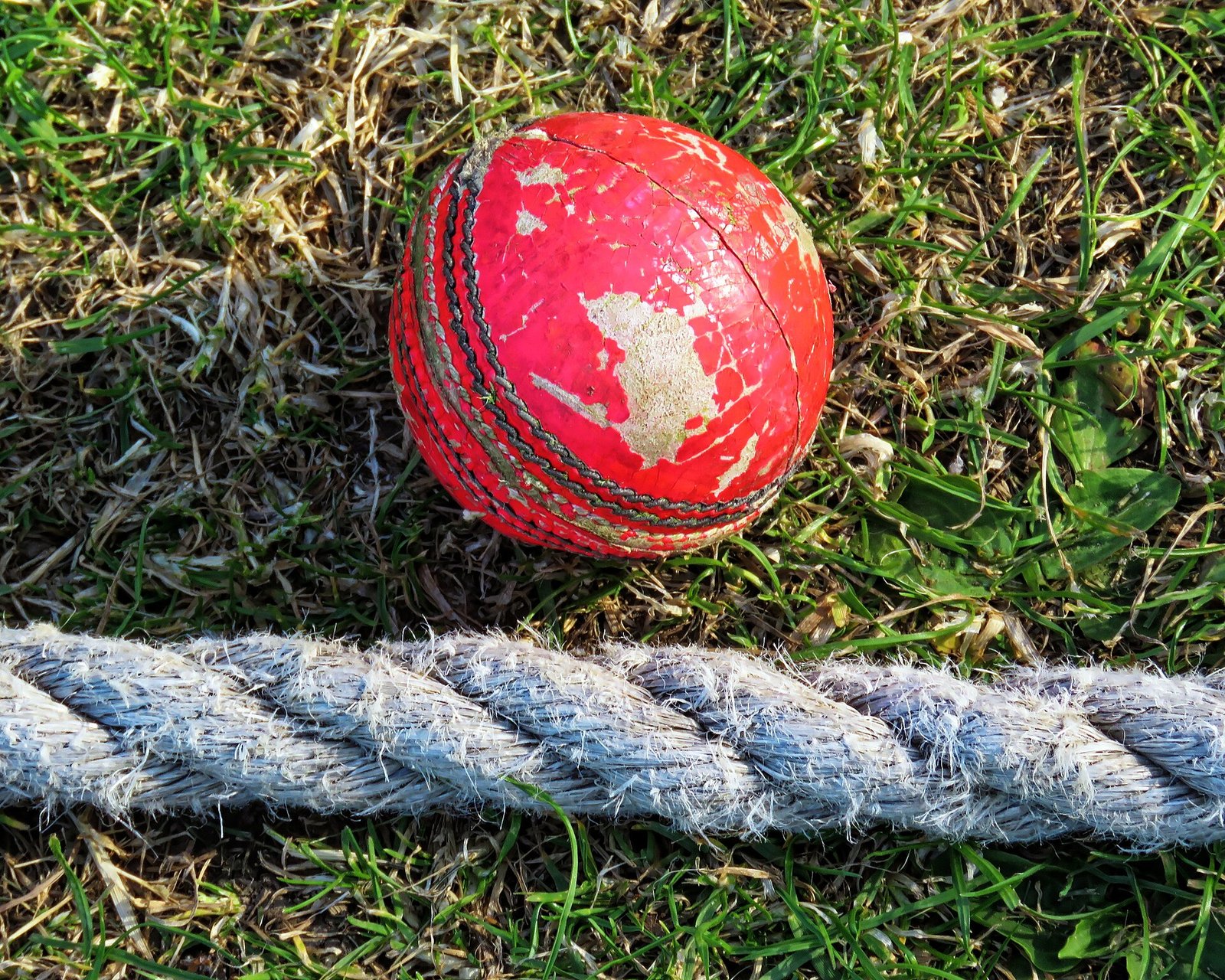
Reverse swing flips this logic. When a ball reaches approximately 85 mph (135 kmph) and has been in play for 25–30 overs, the rough side begins to act differently. At these higher speeds, the turbulent air can no longer cling to the rougher surface; it detaches early. Meanwhile, the comparatively smoother side—despite being still imperfect after 30 overs of use—holds the airflow longer before separation. This creates a reversed pressure differential: the ball now swings toward the rough side, the very opposite of what happens with a new ball at conventional speeds.
Speed and Wear: The Two-Factor Dance
Neither factor alone triggers reverse swing; both must align. A new ball bowled at 85 mph shows minimal reverse swing. A heavily worn ball bowled at a gentle medium pace will not reverse either. The magic happens in the intersection.
A new ball requires velocities exceeding 130 kmph to generate reverse swing, but that speed threshold drops dramatically as the ball ages and degrades. A well-worn ball can reverse swing at speeds as low as 108 kmph—nearly 30 kmph slower. This explains why opening bowlers often cannot access reverse swing early, while death-overs bowlers using a tired ball achieve it more readily. The older the ball, the less force a bowler needs to make it move sideways in unexpected directions.
From Suspicion to Science: The Tampering Shadow
Reverse swing’s early history is entangled with cricket’s darkest fears. Pakistani bowlers—credited with developing the technique in the arid conditions of the late 1940s—perfected it through Imran Khan, Sarfraz Nawaz, Wasim Akram and Waqar Younis. But outsiders watching did not see genius; they saw deception. How could a battered ball move more dramatically than a new one? The answer seemed obvious: cheating.
In 1994, England’s Michael Atherton was accused of carrying a dirt-filled pocket, allegedly to roughen the ball. The incident cast long shadows. For years, reverse swing was treated as a borderline dark art, whispered about and doubted.
Then came the 2018 ball-tampering scandal involving Australia and South Africa. Cameron Bancroft admitted to using sticky tape and pitch debris—a crude sandpaper—to artificially roughen the ball faster than natural wear. The scandal proved that illegal tampering was real and separate from legitimate reverse swing, and it vindicated decades of legitimate bowlers who had mastered the craft without foreign objects.
Legitimate Versus Illegal: What the Rules Allow
The International Cricket Council has drawn a clear boundary. Polishing the ball with sweat and saliva is legal. Shining one side of the leather with cloth and body fluids—standard practice for any fast bowler—is within the Laws. This legal maintenance keeps the shiny side functioning as intended.
Tampering is not. Using sandpaper, bottle caps, mints, fingernails to gouge the surface, or any foreign object to artificially accelerate roughness violates the Laws. The penalty is severe: suspension and bans, as demonstrated by the Bancroft case and subsequent investigations.
Modern monitoring protocols—ball checks between overs, umpire scrutiny, and match officials’ authority to replace damaged balls—have made large-scale tampering harder and brought accountability. Within these safeguards, reverse swing flourishes as legitimate skill.
Aerodynamics Takes Over: The Mehta Vindication
The turning point came in the 1990s when engineer Rabindra Mehta conducted detailed aerodynamic studies published in the journal Nature. Using wind-tunnel experiments and computational fluid dynamics, Mehta demonstrated that reverse swing was not cricket mythology or manufactured fraud. It was repeatable, measurable physics. The boundary layer separation point, the Bernoulli principle in action, the speed thresholds—all confirmed.
Mehta’s work showed that surface roughness, seam position, angle of attack and velocity combine in precise ways to shift where the airflow separates from the ball’s surface. At low speeds, conventional swing dominates. At high speeds with an aged ball, that separation point reverses, and the ball bends the counterintuitive way.
This scientific legitimacy transformed reverse swing from a whispered accusation into a recognised discipline, studied by bowlers, coaches and aerodynamicists alike. Today, the ability to generate reverse swing on demand—at the right speed, with the right ball age and the correct seam position—is a hallmark of elite fast bowling.
Why It Matters Now
Reverse swing is no longer controversial; it is central to modern cricket strategy. Day-night Tests, where bowlers use pink balls over 80 overs, have reignited interest in reverse swing technique because the extended life of the ball creates longer windows for reversal. Coaches now study not just how to grip and release a reversing ball, but how to maximise wear patterns and seam position to unlock it at precise moments.
The physics remains counterintuitive and beautiful: a worn ball moving toward its roughest surface, defying the expectations set by textbooks and conventional swing. From suspicion to science, reverse swing has become cricket’s triumph of aerodynamic understanding.
Sources
- Science behind the captivating spectacle of reverse swing – skill or manipulation?
- Reverse swing: the tricky art of making a cricket ball do the unexpected – PAC MAG
- (a) Conventional swing and (b) reverse swing as shown from above. | Download Scientific Diagram
- Why and How Does a Cricket Ball Swing? Know the Science behind It
- What is reverse swing in cricket? – Cricket Mentoring
- Reverse Swing Cricket Physics Explained 2026: How and Why the Ball Moves | CricJosh
- shining light on the shiny side
- Ball tampering a stain upon the game