Quick summary (click to reveal)
Summary: Cricket bats straightened around the 1770s when bowlers switched from rolling to pitching the ball, making the old curved design useless against bouncing deliveries. Overarm bowling's legalization in 1864 accelerated further refinement, but the straight blade was already 90 years old by then.
Full article below.
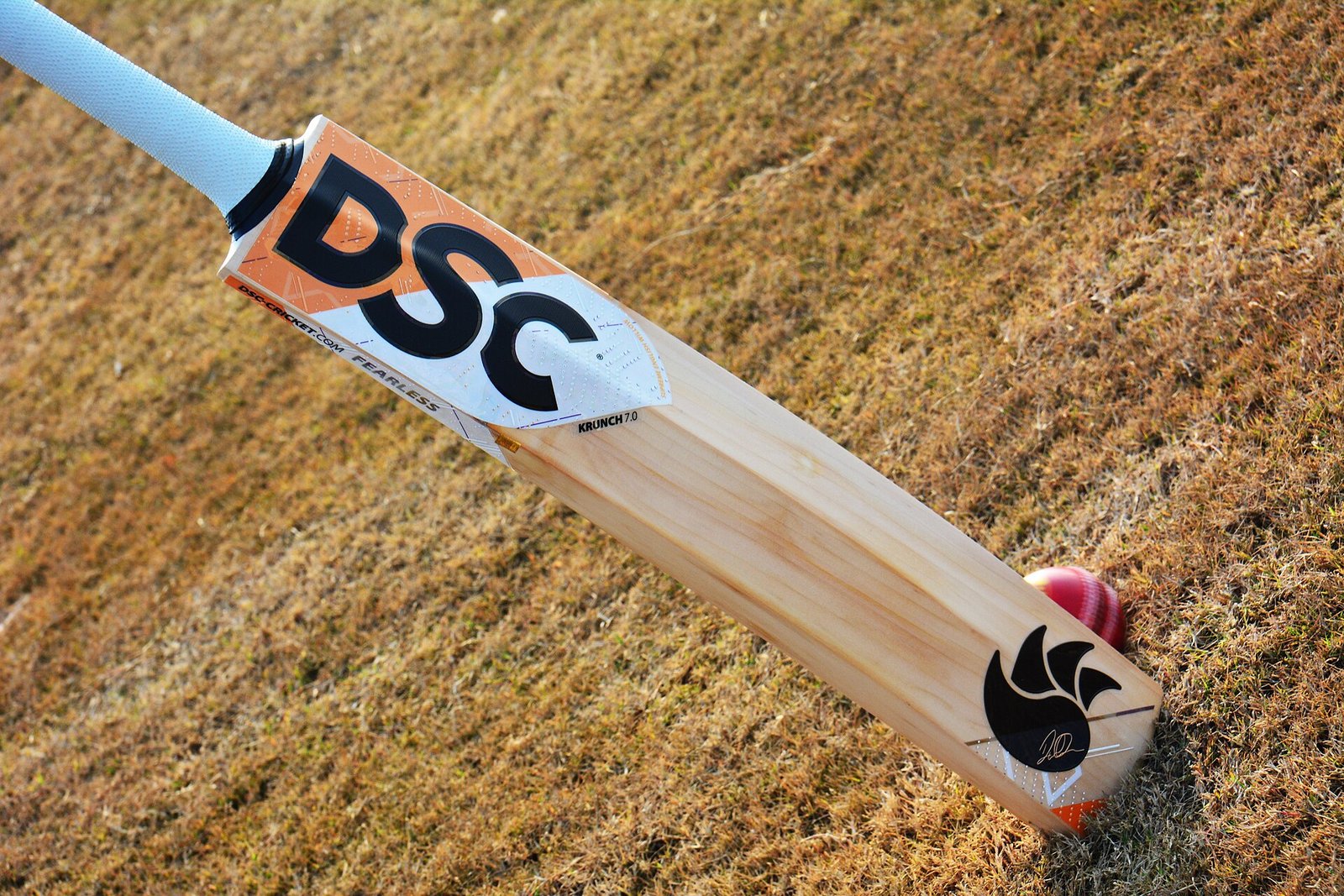
Modern cricket bats are flat-faced rectangles of English willow, tapered into a handle. They look nothing like the curved implements of the 1600s. But the transformation was not sudden, and it was not driven by a single rule change. Instead, it was a practical response to the way the game itself was played—a story of equipment adapting to physics, bowlers adapting to opportunity, and batsmen adapting in return.
The straight bat we know today emerged not from regulation, but from necessity. And once you understand why, you understand something deeper about how cricket evolved from a folk game into a precision sport.
When the ball was rolled, the bat was curved
In cricket’s earliest days, underarm bowling meant exactly that: the bowler rolled or threw the ball low to the ground, much like a lawn bowl. The batsman, facing an incoming missile at ankle height, needed a stick that could defend the wicket by meeting the ball at a downward angle. A curved blade—shaped rather like a hockey stick—was ideal. It could scoop, deflect and protect.
This made sense. The playing conditions demanded it.
The 1770s revolution: pitching changes everything
By the mid-18th century, particularly around the Hambledon Club in Hampshire, bowlers began experimenting with a different technique. Instead of rolling the ball, they started to pitch it so that it would bounce off the turf before reaching the batsman. The ball now arrived at waist or chest height, with unpredictable bounce and angle.
A curved bat was suddenly a liability. A batsman trying to defend their wicket against a bouncing ball with a hockey-stick-shaped implement faced an impossible problem: the blade’s curve would send the ball in wild, uncontrolled directions. There was no precision. There was no defence.
The answer was obvious: make the bat straight. A flat-faced, parallel-edged blade allowed batsmen to meet the ball squarely, whether driving it forward past the bowler or defending against attack. By the 1770s, batters had straightened their wood. The curved bat vanished.
This was not a law change. It was evolution by necessity.
Overarm arrives 90 years later
Round-arm bowling emerged in the early 19th century, becoming widespread by the 1830s. And then, in 1864, overarm bowling was officially legalized—allowing bowlers to release the ball with a fully extended arm above the shoulder, the style we see today.
But the straight bat already existed. It had existed for nearly a century.
What 1864 did was accelerate refinement. Overarm bowling introduced greater speed, sharper bounce and more variation. In response, bat makers began crafting lighter blades with flatter profiles, better suited to the new pace and control required by the modern bowler. The shape did not change because the bat *had* to change fundamentally—it changed because bowlers could now do new things, and batsmen needed to respond with new tactics.
English willow and precision design
Early straight bats were carved from English willow, a wood chosen for its light weight and resilience. A single piece of wood—no separate handle, no cane reinforcement—was shaped and straightened. Over the 19th and 20th centuries, construction techniques improved: handles were reinforced with cane, faces were profiled, and the weight distribution was optimised for different playing styles.
Modern regulation now codifies what centuries of play taught makers: the face shall be flat or have only a slight convex curve. Maximum edge thickness is 40mm, blade width 108mm, depth 67mm. These limits exist because a straight blade with a flat face is so efficient that without boundaries, it becomes a different implement entirely—too rigid, too powerful, too far removed from the contest between bat and ball that defines cricket.
Equipment tells the story of the game
The cricket bat’s evolution reveals a fundamental truth: in a sport with deep Laws and traditions, equipment does not change because lawmakers wake up and demand it. Equipment changes because players solve problems. Batsmen in the 1770s needed to hit bouncing balls; they straightened their bats. Bowlers in the 19th century discovered new ways to deliver the ball; batsmen and makers responded with lighter, flatter designs.
Regulation follows practice. Rules crystallise what works.
The straight bat is not a product of the 1864 overarm decision. It is a product of batsmen who faced pitching bowlers and realised that a curved stick would not survive contact with precision play. That insight, born on the practice grounds of Hambledon two centuries ago, is still written into every modern bat you see today.
Sources
- Cricket Bat History – CricketDirect
- Cricket Bat History: How Cricket Bat Design Has Changed Over Time – Prophecy Cricket bats and equipment
- The History of the Cricket Bat: An Incredible Evolution | Cricket Discounts
- History of the Cricket Bat: Evolution Over Time – Cricket Store
- The History of the Cricket Bat
- The Evolution of the Cricket Bat: From Hockey Stick Shape to Modern Da – Cricketer Pro
- The Evolution of the Cricket Bat – English Willow Cricket Bats
- Timeline of Key Changes in the Rules and Format of Cricket | by Mr Fahad | Medium